As skiers, snowboarders, snow-minded people we get caught up in the chase.
We chase snow all over the world.
When watching a ski film, it wouldn’t be unusual to see a new location about every 10 to 15 minutes. Each year I travel in the pursuit of snow. A lot. All in pursuit of the fluffy goodness that we all want to surf through.
So yeah, it’s the stuff we dream of and what we long for.
But how about our local hill? Is it enough?
If you’re like me and you work in some way with the snow, I hope you’ll say yes.
But for our purposes, let’s break this into 3 segments. Those that have a hill. Those that have a snowy hill. Those that have a mountain.
Let’s start with the mountain folk.
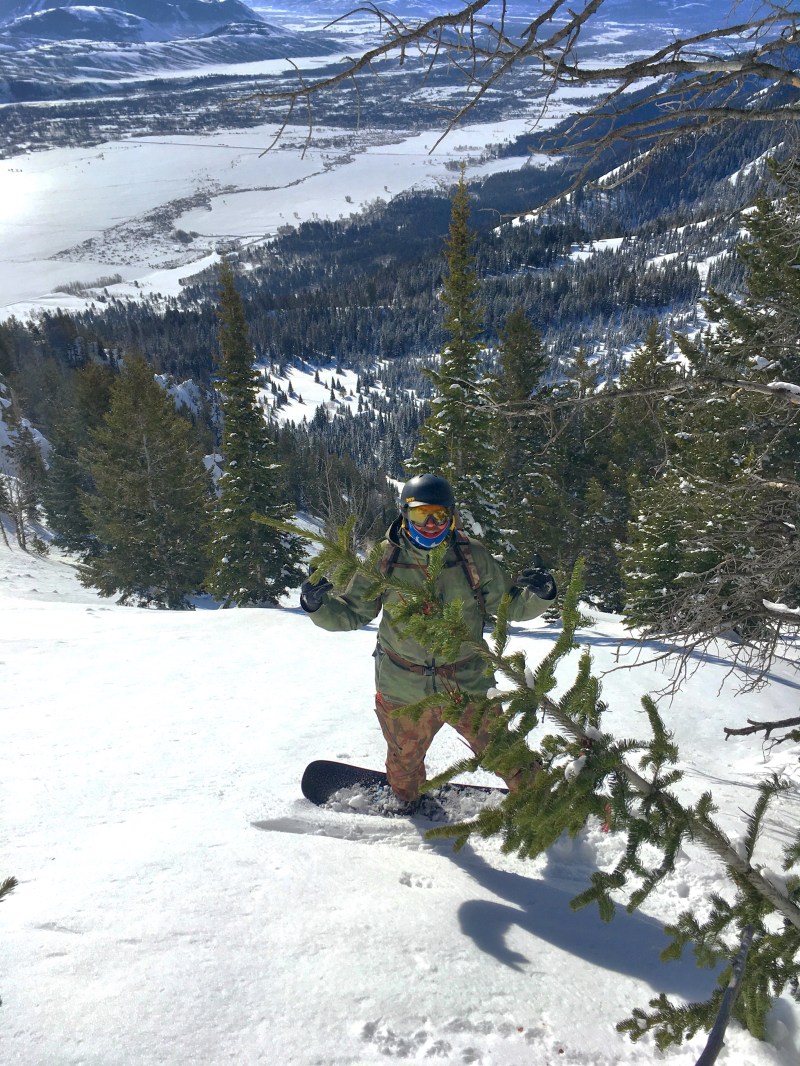
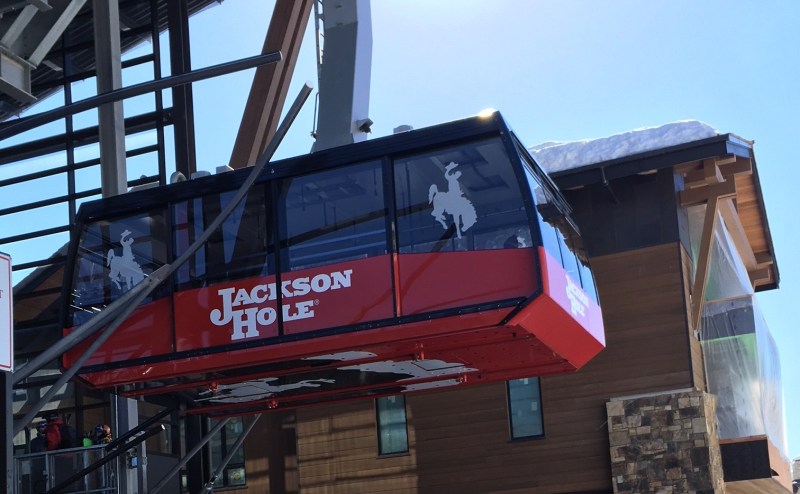
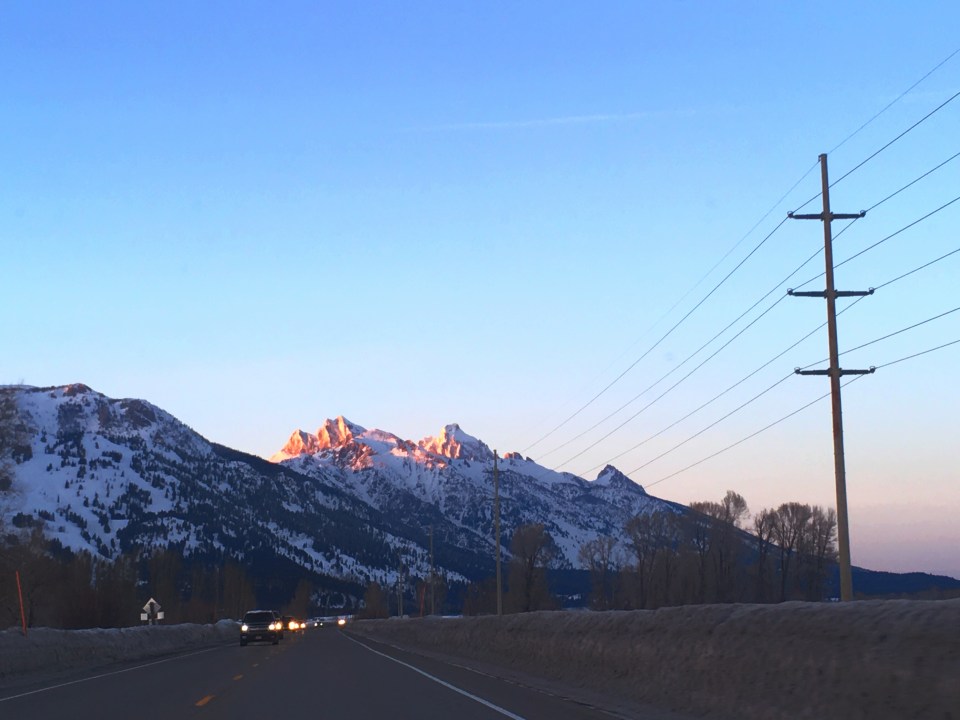
I was in Jackson Hole, Wyoming visiting my buddy Matt this year and had the opportunity to ride out the backcountry on a powder day. Need I go on? (I will…)
It was as incredible as you’re probably thinking. We had near perfect conditions, and due to the storm that took down power-lines to Jackson and shut down the resort for a few days, much of the mountain was fair game for a good part of the day they reopened. But the backcountry was untouched.
However, it was the passionate folk that make this place up, that run these ski towns and the mountains, that stopped me in my tracks. The people in these towns are special. From Jackson to Aspen, it’s incredibly tough to earn what most would consider a “decent” living, and yet the locals scrape by. They love it. The rich and famous come and go, but the mainstays of these towns are hard-working, life-inspired mountain folks.
Clearly, “this” is enough. Locals sacrifice cushy jobs and the chance to earn higher income to be in places like Jackson Hole that just recorded 593” of snowfall for 2017.
Your soul is on fire, constantly fueled with the goods.
Ok, the snowy hill folk.
You know exactly who you are Vermont, New Hampshire, Maine, Massachusetts. It’s not a ridiculous amount of snow, but the snow still falls on the hill. Enough to not rely on snowmaking, but not enough to have a full season without it.
This works out quite well, because while the yearning to chase powder elsewhere is still very much alive, there is still the promise of somewhat consistent snowfall year-to-year. Now, the changing climate and fluctuation in global weather patterns could diminish that, but for the most part there is still a feeling that the snow will come for at least a few more years. And this keeps the locals at bay. There’s enough to go at on the hill and the powder comes just enough to keep the bump lines from getting frozen entirely solid (though that’s not always the case).
And “that” is enough.
The fire is fueled with enough fresh snow and a mix of the blown crumble, and that gets you by until you visit the West again.
Ok, so what about Texas?
What about Texas? Well, unfortunately for now you still can’t ski in Texas (but you can surf).
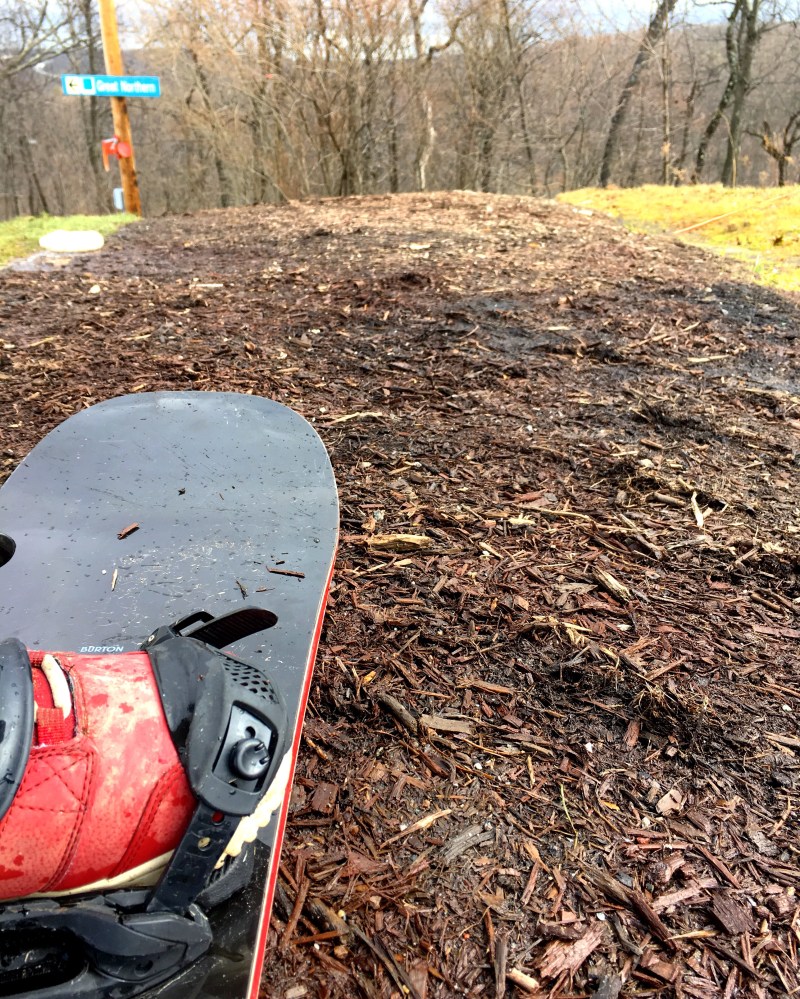
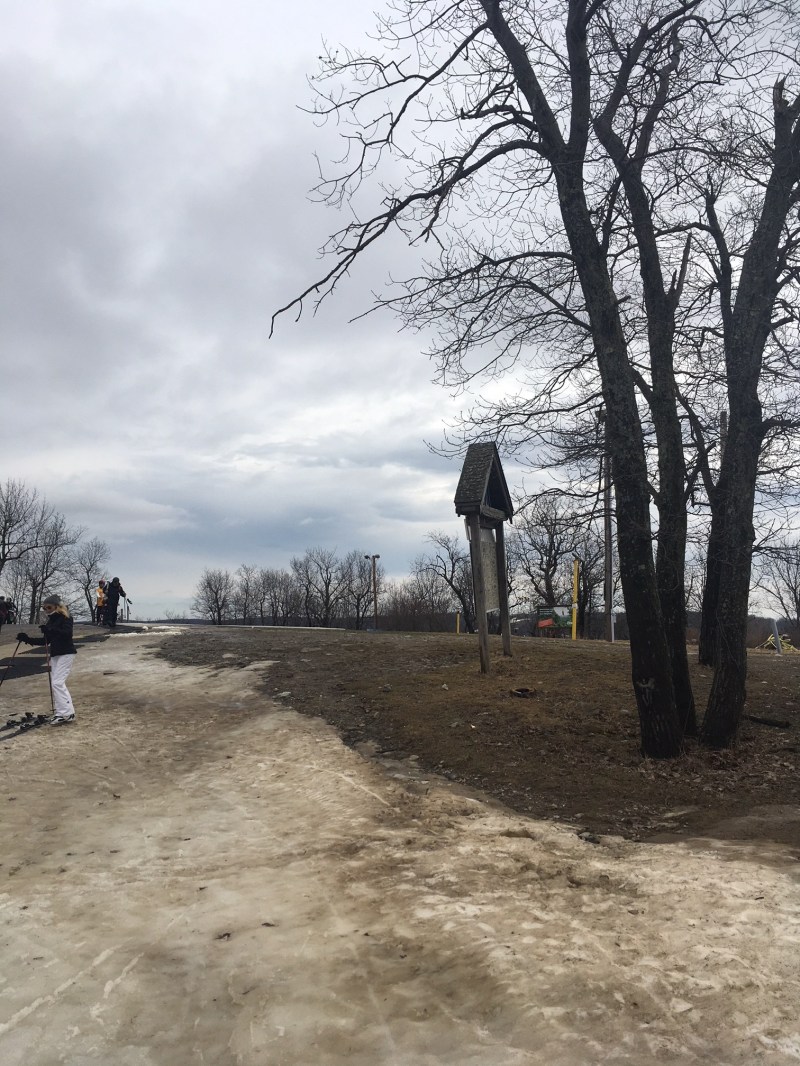
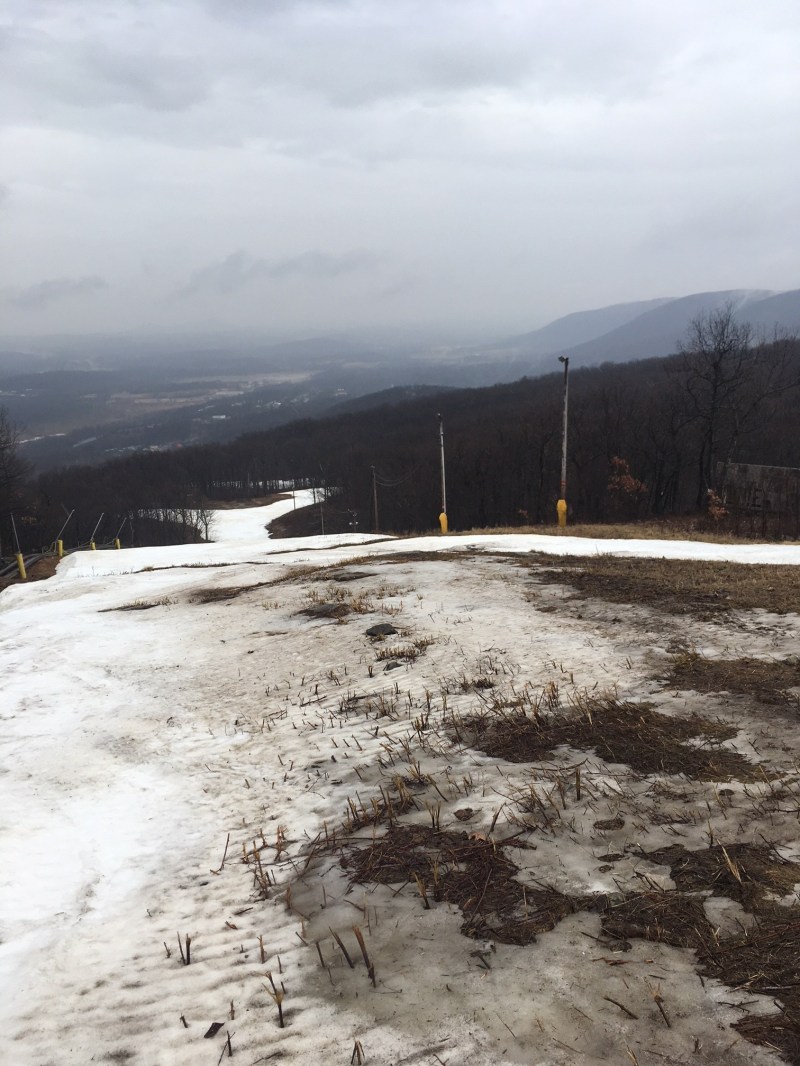
How about New Jersey? Maryland? North Carolina? Surprisingly, you will actually find places to ride a couple planks down a hill on snow in each of these states. I patrol, teach, and coach every winter at my local hill in New Jersey. When I say hill, I do mean it’s a hill. And we don’t get much snow at all. This year however, we hit record lows as the spring thaw hit early and hit hard to the point that by mid-February I was patrolling the greenery, and less-so the public.
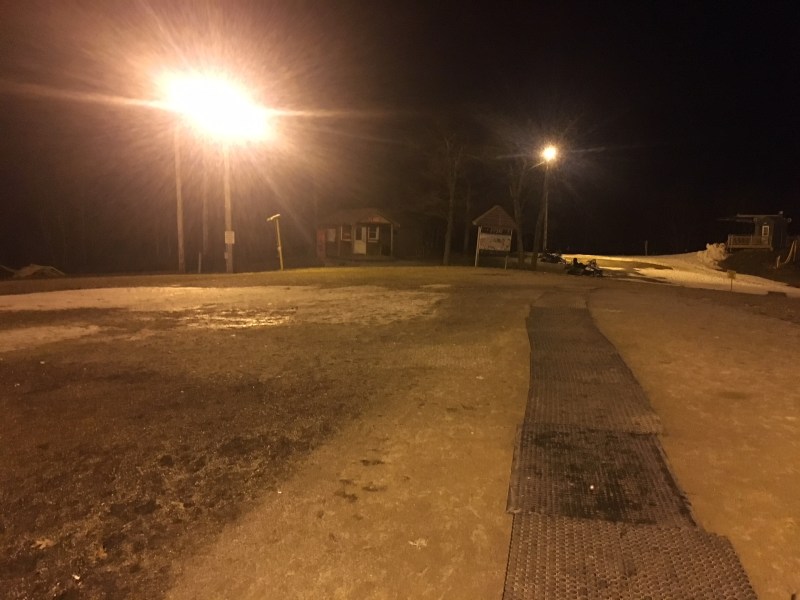
This is a photo I took at the summit of Mountain Creek on February 25th, 2017. Those of you familiar with the area will notice the blue “Great Northern” trail sign in the top-left of this photo. You can see the trend for yourself here as more winters are experiencing the fluctuations of temperature and precipitation.
Now, I grew up in England.
Believe it or not, I put my first set of skis on with wet bristled matting underfoot at Sheffield Ski Village. And at a young age learned that falling meant a nasty rash from the wire carpet below. How welcome it was to feel snow underfoot for the first time in the French Alps just a year or two later. How fortunate I was to learn an appreciation as I began my journey with the fluffy stuff.
Because in New Jersey, I hear a whole lot of grumbling.
“Ugh, it’s icy, not going”
“Dude, why do you even wanna ski that? It’s not even fun”
“Yeah, it snowed, but its only like 2 inches”.
COME ON! OF COURSE WE WISH WE GOT MORE SNOW, but let’s be humble. We’re in New Jersey and at this stage we’re grateful to even get a nice snow.
But snow is snow, man-made or fallen from the sky, and I can tell you that I had just as much fun riding around on what snow we had left on February 25th as I did in Jackson Hole.
… are you kidding, I can’t say that. Jackson was a world of its own. I will say this, though. I have an absolute blast on my local mountain. Ice, rain, slush, sand, crud, and sometimes even snow.
And, I’m going to get serious for a minute because this is actually rather important.
The “need” for endless powder is actually a relatively small issue in the grand scheme of things and there really is nothing to complain about. Really, there isn’t. The snow is not our right, nor is it your right to be on the mountain. It’s a privilege that we are able to do any of this. And sure you can complain about the lack of “good qual snow” but it’s negative, and why be angry about something you can’t change? Attitude is a big player in the problems we see on the mountain, from angry aggressive snowboarders, to skiers who think no one else can be in their way. I say this sincerely but gritting my teeth: at that point you should just keep your gear packed away. I think I can comfortably say that the Mountain would be nicer without seeing you at all.
There’s a sense of entitlement, and a certain “better than this” attitude that has spread amongst some of the local skiing establishments in the Northeast, and I’m sure it pops up elsewhere too. And while it’s easy to see where it starts, it’s hard to understand why. There’s a sense that the lack of “real” snow and massive dumps is unfair. But you chose to live here. Furthermore, not a single one of us can reasonably say that we were skiing even reasonable powder lines on our first day, or laying out euro carves in the corduroy the second time we strapped in, or hitting bumps the 4th time we got off the chair lift. No, not even Candide. And yet every one of us had an immense amount of fun. Enough to keep you going this long. If you don’t believe me, ask any person in the beginner-intermediate range to go ski or ride and I’m about 80-90% sure that they’re unlikely to care about the conditions. Because that’s not what it’s about.
If you’re wondering what my point is, here goes.
It is enough.
We ski and ride to connect. With nature, with ourselves, with other people, with the unknown. Not for the weather.
And you can recognize this yearning, or leave the thought right here, but there is some beauty in knowing why we do this, and hopefully in understanding the why, we can learn to leave the negative behind. At the end of the day, you make of it what you can.
So, ski, ride, shred it all. Appreciate every opportunity you have to put one plank or two under your feet. Whether you’re one of the New Jersey crowd like myself, or the Jackson Hole mountain folk like a few of my friends, don’t become someone who looks back at the season and wishes they got more days on the hill.
“How can you say that? We’re one of the most eco-conscious groups out there.”
That’s the exact response I got from a colleague of mine on the Patrol when I asked if we as skier’s and rider’s are a part of the problem.
I don’t disagree with his statement. For the most part, those who enjoy winter sports are incredibly aware of the environment and climate change as a whole. We see it happening in-front of us, after all.
Vernon Peak of Mountain Creek February 24, 2018.
But is awareness enough? Is being conscious of what we’re watching happen before our eyes and continuing on our merry way the best we can do? I’m going to go out on a limb and say that it’s not.
“This winter is crazyy” –every soul under the sun.
Our winters are becoming more and more unpredictable, and there’s one culprit. Us. For those who say we couldn’t possibly make an impact on the world, that we don’t have any influence over it’s weather patterns, and how could we be so egotistical to think that we have that much power, etc. wake up. We are a domineering species on this planet and we have touched much of the available land. We’re changing the world, and it’s not for the better.
“The US National Oceanic and Atmospheric Administration (NOAA) and the National Aeronautics and Space Administration (NASA) reported that 2016 was the hottest year since modern measurements began in 1880.” –Director of National Intelligence
This is happening at a much quicker rate because of us: humans. If you believe we were able to produce enough food for entire populations on a mass scale in the form of factory farming, is it really that hard to believe that we are having a massive impact?
We are watching our winters become less and less, retreating further into elevation. The spring thaw that hit last February, the February before, and the February before that has become grown longer and started a little sooner each year.
Vernon Peak of Mountain Creek, February 25, 2017.
The creek unfreezes earlier again this year at my mountain and the snowmelt runoff is flowing faster and more furiously down into the surrounding rivers. The temperature steadily creeps up and the rains are becoming more and more, in place of the snow that used to fall and the cold that kept the creek frozen in time. The peace I come to find at the mountain is interrupted these days with the flowing streams and rivers from the runoff. It’s a strange feeling hearing these sounds as we close rather than just the steady whoosh of snow moving under our feet.
“It’s crazy weather; this is insane for February,” people say to me. Some of these people will also say that climate change isn’t that drastic or that we still have time before it takes effect.
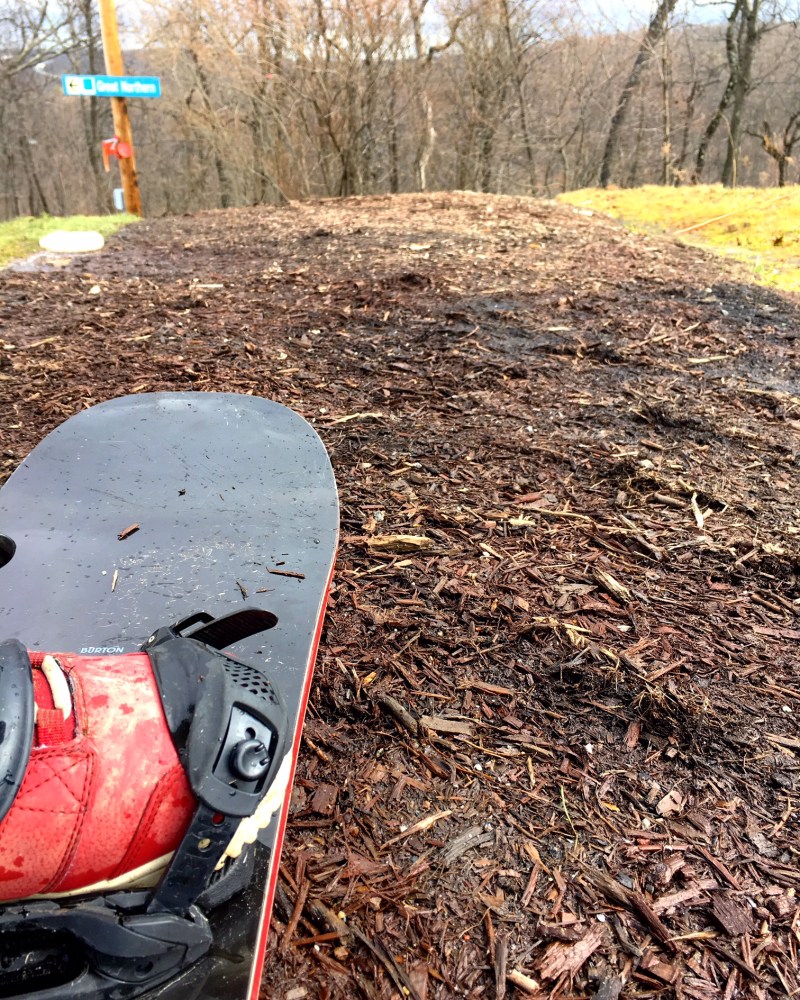
Mountain Creek’s “Great Northern” trail on February 24 of 2018
The Northeast of the United States is outpacing the rest of the world in its increasing temperatures and drastic weather patterns. You aren’t hallucinating seeing spring come sooner each year; it’s real. You’re not in an alternate reality when we get hit by 3 heavy snowstorms a week after high 60 and low 70 degree Fahrenheit temperatures. You’re not dreaming, you’re here, and you’re in the middle of our own attack. Our own chaos. Our own extinction. Possibly. And no, I’m not being dramatic.
Its effects aren’t in the future, they’re happening now. Temperatures in the winter have increased at an average rate of 1.3°F per decade since 1970. This results in less snowfall, less lake freezing, and wetter, more saturated lands.
From New Jersey to Vermont, less snowfall each year can be devastating for the mountains. Wildlife and vegetation aren’t the only sufferers from less snow. The significant decrease in snow-covered days has a dramatic impact on mountain operations, tourism, and local populations.
This is a vision of the future of our peaks in the middle of winter.
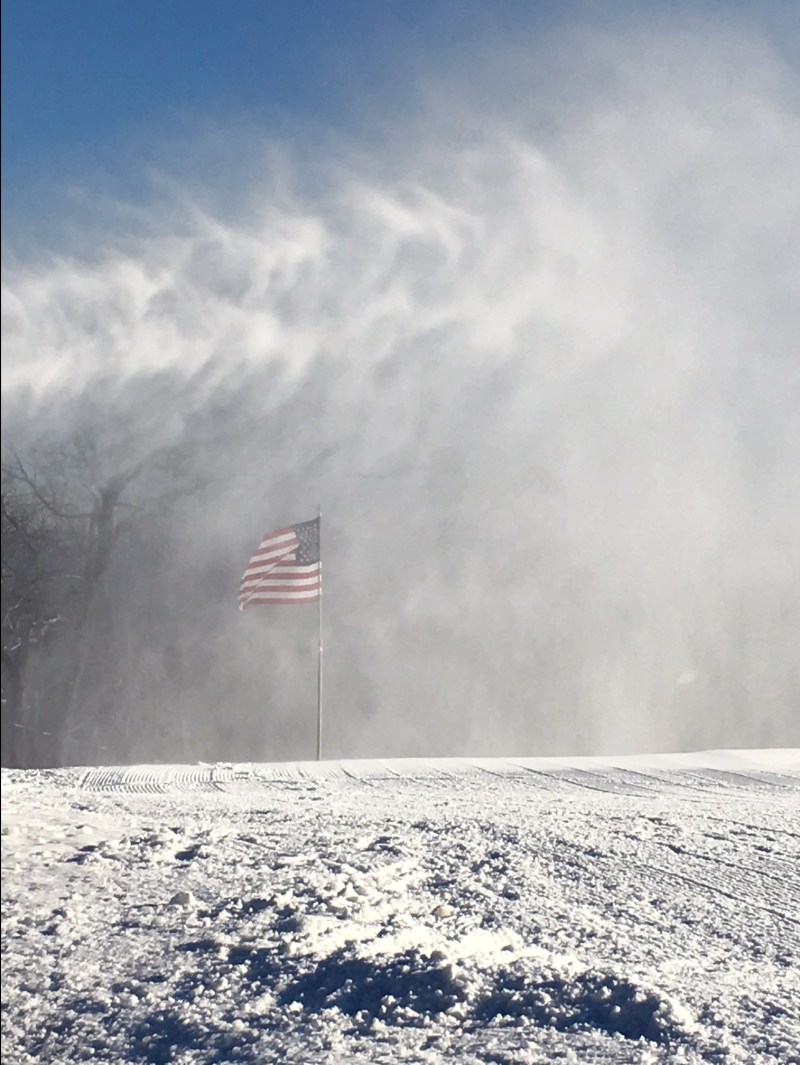
Every season my local mountain blows a lot of man-made snow. Tens of thousands of gallons of water are pressurized and blown into the air to crystallize into snowflakes. And the amount they blow is increasing. One example of the colossal amounts of water we use is an area in Massachusetts, which was found to pull as much as 4,200 gallons of water each minute for their snowmaking. There are times when my local hill in NJ has 118 guns going, each requiring an average of 100 gallons of water per minute for each snow gun.
“The Might Gaw”
Why does this matter? Why am I saying any of this?
There is a footprint that we create in our environment in making snow. The cost comes in many forms, largely in part due to generator and electrical use in our buildings, and direct damage to the environment by pulling water from lakes and ponds, hauling equipment, drainage, the list goes on. The majority of the time, we are doing more harm than good to our environment when we create snow, which we commonly offset by suggesting that the economic benefits outweigh the environmental impact.
The problem is this: the two aren’t the same, and they speak for different causes. Intertwined, sure, but not the same, and so one’s loss does not get made up by the other’s gain. In fact, the more we impact our environment, the greater losses our economy will face from less ski operations. Conversely, the economy could spike and the environment continues to degrade. You see my point, the two are mutually exclusive.
This deficit is only destined to increase at the current rate that the climate is changing. The rate that the climate is becoming more unstable. Don’t get caught up on the “climate change” language. It’s just that: language used to describe what is happening. The climate is changing to a more unstable one that is globally warmer. Based on current weather models and historic data, these temperatures show no sign of decreasing in the near or even distant future.
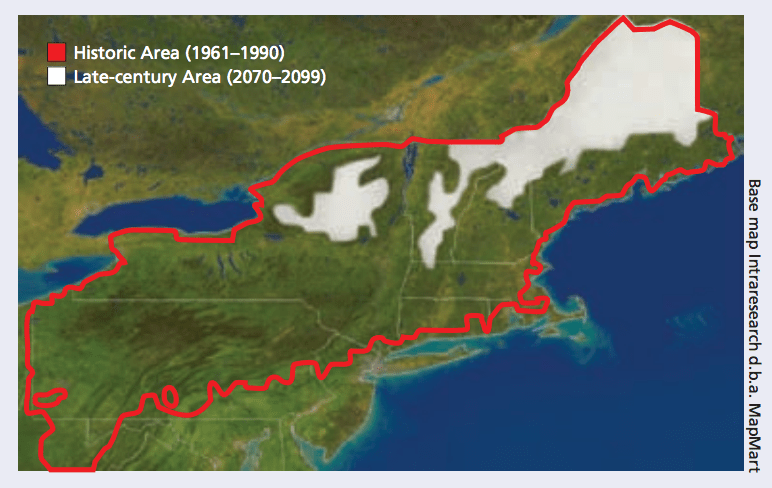
Snow for the northeast are projected to crawl into the upper corners of Maine by the end of the century.
Projections for end of the Century 2000. Source: Union of Concerned Scientists
Snowmaking isn’t the only thing resorts do that grates against the environment, however. From powering lifts and buildings to running snowcats, snowmobiles, and company vehicles, the weight on the environment and the footprint resorts create is rather large.
Maybe this is all blown out, and not something you have grave concern over, but consider this:
You will not see the world as you know it now
Your children will not experience the same opportunities you did
Your children will see their towns and cities slowly covered by water
Your children will watch species of animals you grew up with die off
Your children’s children will experience food scarcity
Your children’s children will watch the collapse of your hard work
Fear-mongering is a silly tactic used by people to drive the rest of us to do things that they wouldn’t otherwise do. In this case, these predictions are real and are already being realized by coastal communities. This is not fear mongering, this is reality knocking, and it may not be on your doorstep yet, but it will be if we don’t do something to slow the rate at which our climate is changing. Need proof? The United States is already spending massive amounts of money, almost $50 million, to relocate small communities due to encroaching waters on their land. This is just one example of the change that is already at our doorstep, and rising past our ankles.
“This warming is projected to fuel more intense and frequent extreme weather events that will be distributed unequally in time and geography.” –Director of National Intelligence
In Section 335 REPORT ON EFFECTS OF CLIMATE CHANGE ON DEPARTMENT OF DEFENSEof bill H.R.2810 – National Defense Authorization Act for Fiscal Year 2018, Secretary of Defense James Mattis stated: “I agree that the effects of a changing climate — such as increased maritime access to the Arctic, rising sea levels, desertification, among others — impact our security situation”. Former Chief of Staff of the U.S. Army Gordon Sullivan stated: “Climate change is a national security issue. We found that climate instability will lead to instability in geopolitics and impact American military operations around the world”.
Leaders in the United States government and military acknowledge our situation.
It doesn’t have to be this way.
What can be done
Substitute snowmaking for year-round artificial surfaces
Artificial surfaces that allow the ground to breathe limit the impact we make on the environment. By doing this, skiers can still enjoy the hill, people can still experience winter sports, and a winter playground is now a year-round experience. Even if only implemented on the lower portions of our mountains, the amount of water used and the amount of snowmaking involved would be dramatically different. Snow will still fall at higher elevations, and limited, efficient snowmaking could be used to supplement snowfall.
Sheffield Ski Village in it’s heyday, circa 2000. Image courtesy of Lugares de Nieve
My first time on skis was on artificial surfaces at Sheffield Ski Village (since ruined by arson) in the UK. No, it wasn’t snow. It wasn’t magical and fluffy. But it got me on skis, and learning how to make my first turns. It was skiing that I could do any time of the year, anytime I wanted to practice, and it taught me the importance of staying upright. Does it compare to being on snow? Funnily enough, yes, kind of. Can you lay out your turns, fully engaging your edges? Not so much. However, what you can do is practice wedge turns (pizza/snowplough for you non-teaching folks), gliding turns, moguls, and park features. You can practice most of the skiing and riding that the vast majority of the public will engage in at a resort. That’s a big plus.
Improve snowmaking equipment
Snowmaking equipment has evolved since we first started making snow. New technology improves energy efficiency for snowmaking by converting to primarily external mix guns.
At Jiminy Peak Mountain Resort, they cut air consumption in half at 19 degrees wet bulb by using LP3 (fan-driven) snowmaking equipment. In 1998 it took 6,523 kilowatt hours (kWh) to convert 180,000 gallons of water (equal to an acre foot of snow) into snow. In 2006 it took 3,804 kWh to convert 180,000 gallons into snow for an acre foot. Jiminy averages 700 acre feet of snow per winter. In 2006, the system’s old technology would have required 4,566,100 kWh versus 2,661,400 kWh in 2015. This is almost 50% of the energy that would have been used, annually saving almost 2 million kWh. That’s a lot.
Run efficient generators that harness waste energy
Efficient generators not only maximize their power output per source of power, but take advantage of the by-products of their use, either from the equipment they run, or in the generation of power. We see this today in electric and hybrid cars that use regenerative braking. You can read more about how this works here. If the automotive industry is utilizing this, surely the generators we run can recoup some of the energy too.
French ski area, Les Gets in the Portes du Soleil, replaced their diesel generators with solar panels to manage the power of the ski lifts, and use the lift itself to generate energy. Their operations recuperate kinetic energy on other chair lifts from the rotation of the return pulleys on the pylons.
At Snowbird in Utah, resort owners elected to construct a co-generation utility plant powered by three Cat® G399 gas engines, each connected to a 650 kW generator. The generator sets are used in conjunction with a combined heat and power solution that maximizes the energy produced by the engines. Heat is recovered from exhaust gas, engine jacket cooling water, lube oil cooling water and turbocharger cooling water to produce steam or hot water that can then be used for a variety of different things.
This approach achieves total energy system efficiencies of 70 to 80 percent, resulting in lower fuel consumption and reduced emissions compared with processes that generate heat and power separately.
Jiminy Peak installed a cogeneration unit in their Country Inn. This cogeneration unit uses propane gas to power a motor. The motor produces heat which is cooled by circulating water. The hot water produced during the cooling process provides the heating source for the core of the building, including the year-round outdoor pool, hot tubs and John Harvard’s Restaurant & Brewery, as well as the Front Desk facilities and conference rooms of the resort.
What makes cogeneration particularly popular is that a by-product of the motor’s operation is the production of electricity – essentially two for the price of one. The cogen unit produces 400,000 kWh per year, which is consumed entirely on-site, thereby reducing the need for 400,000 kWh from the grid. Cogeneration systems are more environmentally friendly than traditional power plants and will result in the reduction of carbon and greenhouse gas emissions.
Aspen Skiing Company has been making grand steps since 1997 for green operating. They are another of the resorts that use waste energy produced by other systems, and they use it to drive major operations. They have partnered with a nearby coal mine, an energy company, and a gas company to capture waste methane vented from the project. The three megawatts of power produce as much energy as the ski co. uses annually—approximately 24 kWh. This initiative also eliminates three times the carbon pollution created by the resort each year by destroying the methane that would otherwise be leaked to the environment.
Harness the forces of the environment to power systems
On July 1, 2008, Aspen Skiing Company installed a 147 kW solar array at the Colorado Rocky Mountain School (CRMS) in Carbondale, Colo. The 147kW system sits on one half acre of ranchland owned by the high school and is the largest solar electric installation in western Colorado. The array is currently powering the school’s science building and feeds excess energy into the town of Carbondale’s power grid. Annually, it will produce 200,000 kWh (enough power for 20 average American homes) and keep 400,000 lbs of carbon dioxide out of the air.
To further reduce its CO2 emissions Aspen Skiing Company developed a 115 kW micro-hydroelectric plant on Snowmass Mountain. Using water from a snowmaking pond, it generates 150,000 kWh annually, preventing the emission of 300,000 pounds of carbon dioxide.
Aspen isn’t the only large resort to do this. Whistler Blackcomb has The Fitzsimmons Creek Renewable Energy Project, which produces enough power to match the total annual energy consumption at the resort. Located within Whistler Blackcomb’s operating area, the run-of-river project produces 33 gigawatt hours of hydro electricity per year. Just to be clear, 1 gigawatt hour is 1 million kilowatt hours, so 33 million kilowatt hours. That’s enough to power the ski resort’s winter and summer operations including around 40 lifts, 17 restaurants, 270 snowguns and countless other buildings and services.
Jiminy Peak began producing environmental power after three years of creative financing, studies, and engineering challenges in the summer of 2007. Zephyr is Jiminy Peak’s1.5 megawatt wind turbine that uses three 123 ft blades mounted to a 253 ft (76m) tower. From blade-tip to ground, it’s 386ft (116m) tall. Jiminy’s wind turbine generates 4.6 million kWh (kilowatt hours) of energy per year – about 33% of the resort’s total electricity consumption. When wind power is the strongest, the turbine can power up to 50% of the resort’s operations in winter.
“The turbine helps to protect the long-term viability of Jiminy Peak as a resort, and therefore helps to assure jobs better than being at the risk of changes in power prices” –resort statement.
While protecting job security for employees, the turbine eliminates the need for many destructive forces. 1 gallon of diesel fuel is needed to generate 12 kWh, and so by Jiminy Peak’s estimates, this eliminates the need for 113,022 gallons of diesel fuel each year to generate power. The turbine also eliminates the production of what would have been:
7,100,000 pounds of CO2 (greenhouse gases)
33,000 pounds of SOx (a leading contributor to smog and the chief cause of acid rain)
10,000 pound of NOx (a leading component to smog and a cause of asthma)
Jiminy Peak went to great lengths to ensure that this project did as little damage to the environment as possible, evaluating local wildlife interaction, plantlife, aviary migration routes, etc. finding that there would be little impact on any local populations.
“Perhaps more importantly is the impact of this wind turbine on our generation’s grandchildren and great grandchildren in a country where we have too much dependency on fossil fuel for energy.”—resort statement.
Introduce automatic lighting and heat controls
Whistler Blackcomb reduced annual electricity consumption by 4,575,000 kilowatt hours (kWh) by introducing automatic lights and heat controls. That’s enough energy to power 450 Canadian homes for a year, or 425 US homes (yes, the United States is less energy efficient, no surprises there). By replacing 11,000 light bulbs with more efficient and environmentally friendly light bulbs, they saved 1,533,000 kWh annually.
Jiminy Peak replaced 1,000 watt bulbs with 400 watt high efficiency bulbs on 5 trails with the ability to go to 1/2 wattage when used during snowmaking. That alone saves 53,505 kWh annually.
Base Lodges, Country Inn, John Harvard’s Restaurant, Cricket slope, Mountain Operations, Berkshire Express, and Cricket lift were all retrofitted with energy efficient LED bulbs in the Fall of 2015. This is saving the mountain approximately 171,551 kWh annually. As of 2016, the 180, 360, and Lower Slingshot trails were planned to be upgraded with energy efficient LED slope lighting, and Jiminy planned to have all of its trails illuminated with energy efficient LED’s within the following 2 years.
THIS IS NOT ALL THAT WE CAN DO.
These are just a few of the things we can do to make skiing sustainable. This isn’t something you or I can do alone, but it is something that we need to be vocal about. We need to talk to our mountains, petition our operating companies, speak to our resort management, and speak up for what we want. The changes don’t just happen around our mountains either, they need to happen everywhere. What happens in Texas has an effect on Vermont. What happens in the East has an effect on the West. Let’s be sensible about energy and do what’s right.
Stoked me, G8 Aspen Highlands Bowl
We are all connected, and we must start thinking that way.
We are all so very connected and our world is smaller than we think. Heck, we near about say it every day.. “Oh, what a small world”. Well let’s start acting like it’s something we truly care about, rather than standing behind special interest groups that support what drives against us. Let’s make an effort to manage our health and the health of everything we love on this planet by living sustainably, within our means. We stand to lose it all.
Put very simply: if you like skiing, riding, enjoying the mountains, you should not only be aware, but be actively pushing for our resorts to make our way of life sustainable. The benefits reach far beyond enjoying snow, from job stability and our economy, to the cleanliness of our streams, rivers, and surrounding environment.
We can do more, and we must do more. The examples set by the likes of Aspen Skiing Company, Whistler Blackcomb, Jiminy Peak, Snowbird, and Les Gets, are just that: examples. Examples of what can be done, and where a few are paving the way today.
We must continue to educate others about this problem, and not stand idly by as our mountains continue to melt earlier, our winters become more unpredictable, our weather systems become more unstable, and our environment continues to suffer.
Let’s not be here in 20 years wishing articles like this had been seen, because as far as I can tell, this may just turn out to be “another warning” that generations ignored.
Late Autumn. Yep, it’s that time again, the first chill is in the air.
I dread this time of year. Everyone else around me appears to as well, but our reasons are completely opposite.
“I love the fall, the colours changing, but ugh, then I’m just gonna hibernate for the next 4 months until spring again” –winter hater.
OR
“I can’t wait for the cold to go away so I can come back outside again. I just get so depressed in winter and there’s no way around it.” –winter excuse-maker.
Neither of these trains of thought apply to me and, in fact, the reason I dread this time of year is precisely because of these people.
I LOVE WINTER.
Winter is my favourite time of the year. I love the cold, I love the chill in the air, the low density and crispness of it all. I love the snow. Every time there’s a snowstorm, people are complaining about how it’s going to mess up their commute, and the shoveling they’ll have to do. And all I’m thinking about is skinning the mountain to get those fresh turns and the delightful fluff that is waiting for me.
This article is for everyone who hates the winter.
It’s not that I can’t stand people not liking the wintertime. Yes, it bums me out to hear that others don’t like it, but if you’re going to live in a place that has winter, either learn to enjoy it or change your situation. You can avoid the snowy winters by simply moving away from it if you hate it that much. Complaining about it just doesn’t seem productive and you’re seriously killing my winter vibe.
So to those who wish to do the latter, here are some places you should consider calling your home instead of the northeast United States:
Florida: sunshine pretty much year-round
Georgia: year-round warmth and less prone to that Florida-afternoon rain
Texas: year-round heat, and on the off-chance you do get snow, you’ll be in good company with the rest of your kind worrying about the snow
New Mexico: that dry-heat, enough said
California: year-round sunshine and plenty of beaches, wine-orchards, and if you do want snow, you can go and see it a few hours away. Just for as long as you like
Anywhere closer to the equator than here, preferably never referred to as “the North”
For those of you looking to take a more active approach, there are things you CAN do to enjoy the winter. Take up a winter sport like skiing or snowboarding. What I DON’T mean by this is to rent equipment and go to the top of your nearest mountain (Mountain Creek for those in NYC) and just “give it a go”. This is NOT the move to make.
What you should do, is take a realistic look at yourself and decide:
How balanced you are
Your coordination level
How much time you have to dedicate
How willing you are to fall
If you have any prior experiences that may help
Follow the guide below to see which approach may be more suitable for you.
Skiing and snowboarding may look quite similar to the lay-person but there are actually a lot of differences in the movements, especially at the beginner level. As an instructor for both, I feel qualified in giving you a detailed analysis of what may make you a candidate for one over the other. This is where your choice may make quite a difference in your expectations of how to enjoy this next winter.
Clothing
Before we even get to skis or boards, let’s be clear: don’t show up in jeans and a hoodie without gloves. This isn’t because I don’t want you to be called a Jerry.
Jerry: an individual who exhibits a true lack of understanding for their sport, or for life in general.
It’s because jeans are incredibly restricting in terms of moving freely, especially when they get cold. They also stay wet once they become wet, rather than wicking moisture away. Wet and cold means freezing. Your jeans will freeze. As will your sweatpants if you wear those or any other combination of regular/casual dress not designed for the winter. A hoodie alone will not protect you from the cold, and will get wet when in contact with snow. And please wear gloves. Your hands are the first to go, and no one likes learning while getting frostbite. Then there’s your head. It makes sense to wear a hat, but that alone won’t protect your noggin from your own falls, and more importantly, other things: people, trees, ice, your equipment, etc. Protect your head with a helmet, by either renting or buying one.
Get yourself a winter coat and snow pants or borrow some if you don’t want to dish out the cash just yet. Grab a pair of sunglasses for a sunny day, and wear some decent socks and gloves. Wearing appropriate base and mid-layers can be a game changer on those single-digit and subzero days too. For more on this, there’s a Liftopia Guide that can help you.
Okay, so that’s your clothing.
Balance
You may be wondering why this matters. It’s much easier to balance with your feet clipped into two separate planks of wood versus both being strapped into one. Your ability to adjust and stabilize yourself is much quicker to master on skis at a basic level than on a snowboard, where you are fixed to one board with little to use as a crutch.
NOTE: we do NOT use poles for stability in skiing, in spite of what you may have already seen on a bunny hill.
So, if you have pretty good balance, at this point both skiing and snowboarding are both viable options to you. However, balance is an issue for you, skiing may be a better friend to you for now.
Coordination
Your coordination level is critical to evaluate. As mentioned above, skiing involves controlling two separate planks where snowboarding involves controlling only one. Plain and simple, if you’re not very coordinated, skiing may be a total flop for you. Who knows, it may be that skiing is what it takes for you to find your coordination, but in my experience, that’s highly unlikely. This is the point where I’d tell you that snowboarding may be better suited to you.
Time
Why does time matter? Skiing and snowboarding are by no means easy to master, though there are some key differences in progression time. Skiing has a quick-start to long-intermediate progression. Snowboarding has a long-start to quick-intermediate progression.
What does this mean?
As a skier, you’ll be standing and skiing on green runs relatively quickly. It’ll take a while before you’re skiing blues and nicely groomed blacks properly and finishing parallel turns (note I said properly; this does not mean out of control or snowploughing blacks). As a snowboarder, you’ll be on your butt for a few days at the start. You’re going to have a rough entry into the sport, but from there, it won’t be too long until you’re gliding nicely down well-groomed blues and maybe even blacks. Both are equally tough to master and gain expert status in, as we introduce carving and fully-shaped turns, edge control, appropriate upper/lower body separation. So time and practice matter, because you’re going to progress a little quicker in snowboarding than skiing after some tough days at the start. You’ll be enjoying some nice greens on skis quicker than your snowboarding buddy who’s at home crying about his bruised bottom though.
Which leads me into the next topic.
Falling
You should (I think) expect to fall regardless of which discipline you start out with. You’ve likely only experienced sliding on ice, or slipping on snow when you’ve stepped on it outside your house clearing snow out of your driveway or when walking down an uncleared street. So getting used to purposefully sliding on snow, and sometimes ice, is going to take some getting used to, and falling is all part of it. Heck, I fall all the time, and I teach, coach, and patrol on the stuff.
However, if you’re really not into falling, you’re less likely to fall on skis (see Balance). Snowboarders start out doing a good bit of falling, from catching toe edges and heel edges, to just sitting down at the end of the run. Bruised bottoms and sore wrists are the usual suspects here, so this may be the one that steers you toward skiing. If you’re more into the “cooler, antiestablishment” look of snowboarding though, please don’t let this rough start stop you. I was there once too. Don’t let a look sway you however, after all, it is just a look. You can look cool, or like an idiot, on a snowboard, or skis.
As a sidenote, my opinion on falling does not correlate with progression on either board or skis. If you are measuring your skill level by the amount you fall, it still gives me no indication of your ability. I fall a lot, and fall into the expert category. If you’re not falling, you’re not pushing yourself.
Prior Experience
The experiences you’ve already had can make a huge difference here. One of the quickest lessons I taught was taking someone who’d been playing ice hockey for 15 years out for their first time on skis. By the end of a 2-hour lesson we were skiing blacks. I’ve taken skateboarders out on a board for the first time and it’s been like introducing a fish to water. Some experiences can give you a real head start. It’s not a guarantee, only a trend I’ve noticed from my years of teaching.
So which experiences may help?
Backgrounds that may help first-time skiers get started:
Ice skating and ice hockey
Horse-back riding
In-line skating
Bike-riding
Any athletic ability from basketball and soccer to swimming and diving
Backgrounds that may help first-time snowboarders get started:
Skateboarding
Surfing
Wakeboarding and any variants
Any athletic ability from basketball and soccer to swimming and diving
What’s The Next Step?
At the end of the day, it’s your call on which one you ultimately want to take up, regardless of this fairly simple guide and any advice I may have for you. The only piece of advice I would urge you not to skip is this: take a lesson.
PLEASE, PLEASE, PLEASE take a lesson. It’s not embarrassing to take a lesson, nor is it something you should feel “above”. I take lessons at the advanced level because it’s the only way to advance and learn how to improve. There is always learning to be done. Most mountains offer great starter packs to get you out on the snow with an instructor. For those in the tri-state area, Mountain Creek offers a beginner package where you can rent gear, and get a lesson for $149.
It’s so important to start learning the right way for a number of reasons:
You’ll enjoy your time on the snow by learning how to ski or ride properly
You’ll be less likely to injure yourself by learning how to ski or ride the right way (as a Patroller, I see a lot of beginners injure themselves because they didn’t take a lesson) , and for everyone else around you.
The package above is for 3 anytime lessons, and Mountain Creek isn’t the only mountain out there offering these kinds of deals. Most mountains have some kind of entry-level starter pack. It’s important to be safe on the mountain and the skier’s code is something you should at least look over before you take to the hill, though instructors will (should) go over this with you.
You take a big step into a whole world of opportunity and adventure when you begin skiing or snowboarding. There’s a massive community of people already doing it, and they’re a great group (for the most part) who love to share laughs, knowledge, and even some drinks! Ever heard of après ski?
So get out there, learn to love it, and enjoy this beautiful time of year called winter!
Let me start by saying that this isn’t my code. It’s not my rules to skiing and riding. And it’s certainly not something I invented nor is it just my opinion.
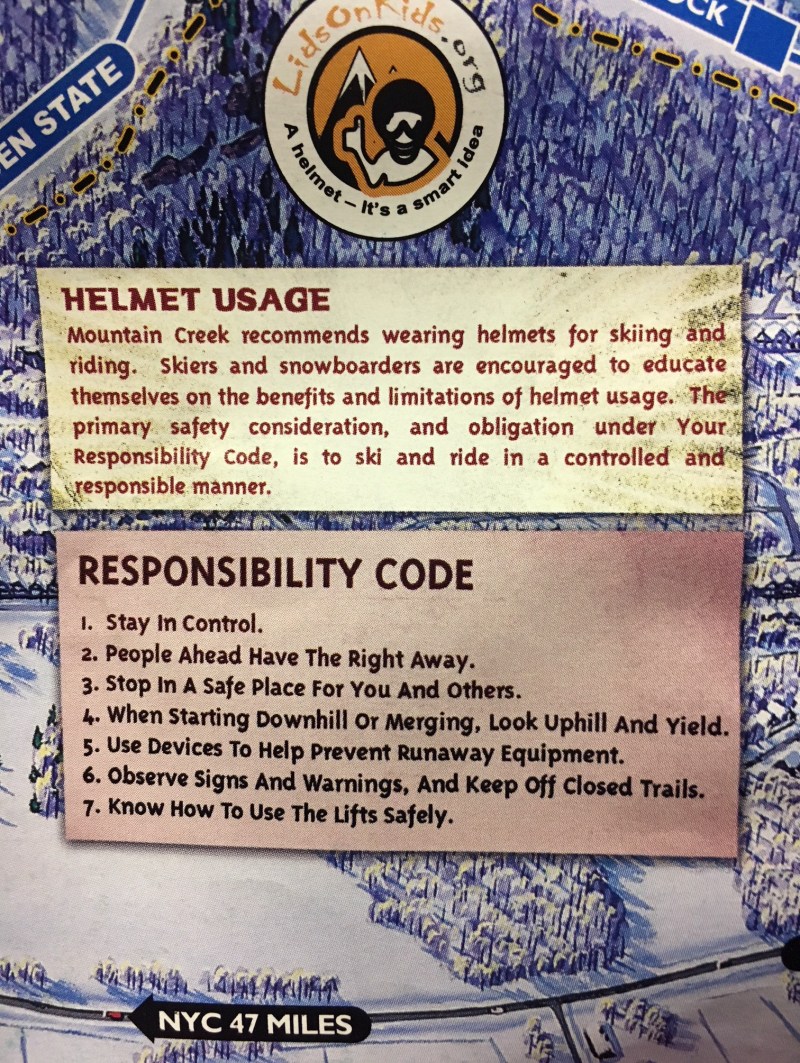
Responsibility Code from Mountain Creek’s Trail Map
The following is a set of guidelines, with some fluff, that were developed to help everyone on the hill ski and ride safely, and generally have a good time. Would it really be worth sharing a hill with people who have no comprehension of the courtesies and considerations involved with sliding? Let’s put it this way: would you want to drive on roads where there were no rules and no guidelines? No lines on the road and no traffic lights?
I think we can agree that the scenario described above would be rather dangerous for driving, and the same goes for skiing and riding. You share the mountain with other people, so we all need a common set of rules to follow. It’s not just for your enjoyment, but your safety, and it’s your responsibility to know it. So, without further ado, I present: The Skier’s/Rider’s Code.
Rule 1
Always stay in control and be able to stop or avoid other people or objects.
Why? Because unexpected terrain, obstacles, and people can appear on the hill. If you are in control, it is more likely that you will be able to avoid obstacles and maneuver safely, saving yourself, and possibly others, a trip down the hill with Ski Patrol. At our Patrol we suggest you only ski or ride at 70-80% (at the most) of your ability as for whatever reason you may need that extra 20% to avoid something. On the other hand, if you ski or ride at 100% of your ability, making maneuvers is that much harder, and stopping takes a lot longer.
Rule 2
People ahead of you have the right of way. It is your responsibility to avoid them.
Photo courtesy of Mountain Creek
This one is something people argue with me about more than any of the others. People are prone to making excuses as to why the person IN FRONT of them was at fault for turning, or using more of the hill than they’d expected. Put simply, this is ridiculous. Think about it like this: you have to look the way you are skiing or riding, which is downhill. If you are expected to look downhill, how can you also be looking behind you to make sure you aren’t in the way of others? Well, you can’t. So, it is your responsibility while someone is INFRONT/downhill of you, AND as you pass them, to make sure that you don’t hit them. It’s their responsibility to make sure they don’t hit you when you are downhill of them too, but giving each other enough space to turn one way or the other is essential, because you don’t know their skiing ability, their intentions on the hill, or their plans to turn or stop.
I’ve even had altercations with fellow instructors telling me I’m wrong about this and that there are ”unwritten rules” that invalidate this. Michael, if you are reading this, I am absolutely referring to you. Yelling “ON YOUR RIGHT” or “ON YOUR LEFT” does not take the place of this rule. Is it good to let your fellow skiers and riders know where you are? Yes. Is it particularly useful to let others know where you are if you are on a tight trail and would like to pass? Absolutely. There’s really nothing wrong with doing this, but it DOES NOT substitute or take the place of people ahead of you having the right of way, and you being responsible for avoiding them, including when you pass them. It is not their responsibility to move out of the way when you yell “on your left”. Okay, moving on.
Rule 3
You must not stop where you obstruct a trail or are not visible from above.
This is one that almost all of us are guilty of doing at some point. Whether we know it or not, it happens. And it happens more often when we’re visiting a mountain. Not knowing where the rises and dips are, where the next trailhead may be, and just generally being unfamiliar with the mountain. This is no excuse, however, because of the problems we create when we obstruct a trail or make ourselves not visible from above. When we do these two things, we cause hazards that may force other skiers to make unnecessary, potentially high-risk maneuvers to avoid us. So we put ourselves in danger, and we force other skiers and riders to put themselves in danger. This is also seen in terrain parks on the backside of landing zones and jumps where it is next to near impossible for a skier or rider to see someone downhill of them over the crest of a jump.
When you stop on a trail, do it at the side where you are out of everyone’s way, and be aware of the rises on the hill to make sure you are not on the backside of one. It’s for your safety, and it’s for ours.
Rule 4
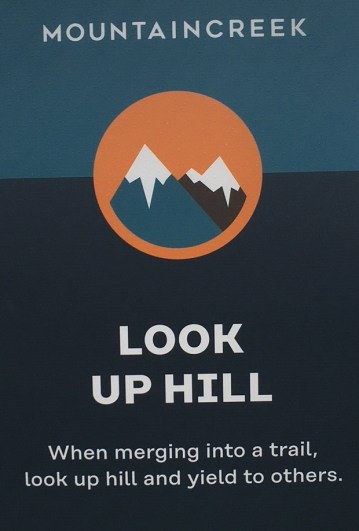
Whenever starting downhill or merging into a trail, look uphill and yield to others.
Photo courtesy of Mountain Creek
I’ll use the car analogy again because that seems to be an easy way of explaining this one. When you’re about to make a turn on to a road, you make sure that there are no other cars coming first. Well the same goes here. If skiers and riders are coming down the hill and you are stopped on the side of the trail (the correct place to stop on a trail), when you start moving again you are re-joining the flow of traffic. It is your responsibility to ensure that when you rejoin the flow, you don’t begin moving when there are people passing you or about to pass you, as this would be the same as moving into the path of an oncoming car.
Rule 5
Always use devices to help prevent runaway equipment.
What does this really mean? Your skis have brakes on them for when you unclip from your binding. These are important parts to the ski as they prevent the ski from running down the hill without you. If you do decide to take the brakes off them, please use strapsthat clip to your ski boot so that the skis don’t accidentally go freeriding on their own. For snowboarders, you can use a strap to prevent your board running away, or you can make sure you maintain a firm grip of your board until you have your front foot strapped in. The amount of boards we see coasting down the hill with no one on them is far too many! It’s an easy one to fix.
Rule 6
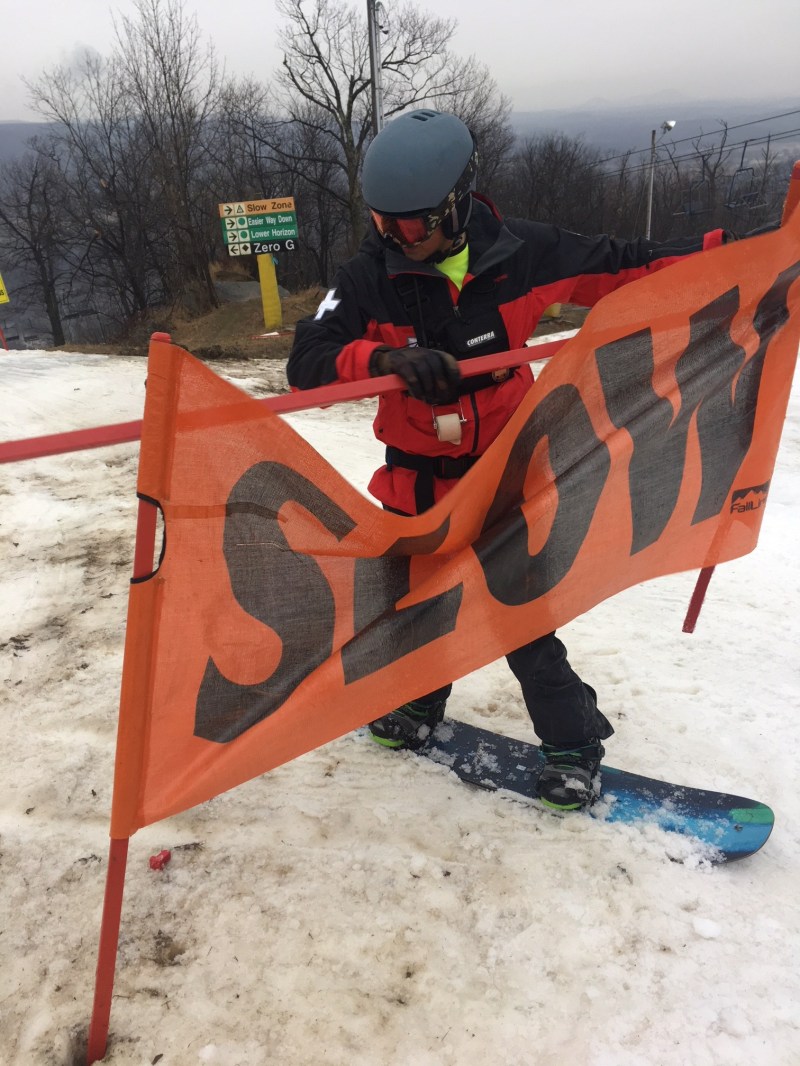
Observe all posted signs and warnings. Keep off closed trails and out of closed areas.
This ranges from slow signs in high-traffic areas and at trail-crossings, to ribbons and ropes across closed trail-heads and specific no-skiing areas. There are good reasons for all of these signs. They’re not just there to stop you from having fun.
Mountain Creek Ski Patrol assembling a slow sign
Slow, Variable Terrain, Thin Cover, Caution: Cliff. All of these signs post some kind of warning to you about something ahead. Important, but rarely observed. Going slow doesn’t mean you can’t continue skiing, it just means that you should slow yourself down because this area of the mountain could have:
High traffic flow
A trail crossing (blind or seen)
Beginner skiers on it
A sharp decline after it
These are just a few of the things the slow sign could be warning you about. Observing it won’t do you any harm, whereas ignoring it could. The same goes for variable terrain and thin cover signage. These are warning you about possible ice, rocks, bumps, slush, crud, etc. It is the Patrol warning you about the terrain ahead and letting you know that you may find unexpected things ahead of you.
Caution: cliff. If you don’t see the importance of this one, maybe you were destined to ignore it.
Rule 7
Prior to using any lift, you must have the knowledge and ability to load, ride, and unload safely.
Why? Because getting on and off the lift can be dangerous. A chair catching you as you’re skiing or riding to the loading zone may result in a bad day. Falling when getting off the chair and being hit by it, or hitting hard on ice may result in a bad day. Basically, any combination of factors that end with you below a chair or being hit by it may result in having a bad day. All it takes is the wrong twist at your joints or falling poorly to end your season (think ACL tears, dislocated shoulders, broken wrists). And that’s not even considering that any time one of these things happen, the lift attendant may need to stop the lift. For any of you who have ridden a chair lift before, this can become rather frustrating when it happens over and over.
How can you ensure you get off the chairlift safely?
Make sure you don’t have any loose clothing that will keep you attached to the chair when you try to make your exit
Sit forward as you approach the unloading zone
Stand up once your skis or board touch the unloading zone, keeping weight over your skis or front foot, and pushing away from the chair if need be
Ride straight down the unloading zone and away from it until you are sure that turning won’t result in you or another person falling
Now, riding the chairlift isn’t usually an issue once you are on, but there are those who fall off, either at the start, middle, or end. To ride a chairlift, just sit down and stay sitting back until the unloading zone (steps for this mentioned above). If you have a backpack, take it off and hold it in front of you. Don’t fiddle with the bindings on your board, don’t reach for your skis, and keep a hold of your poles so they don’t fall off the chairlift. The less you fidget with things and take things off or out like gloves, phones, and GoPros, the less likely things are to fall from the chair and get lost. If something does fall, don’t reach for it, just remember which lift tower it was nearest (they’re numbered) and go get whatever you lost if it’s accessible.
There’s a lot of simple things you can do to stay safe on a chairlift, and most of them involve you, not the chairlift. So talk to the person next to you if you like, or stare straight ahead in awkward silence, but know the risks you are taking by messing around with all of your gadgets/toys/equipment while you’re up high in the sky.
This list of rules is a basic set of guidelines for you to know and practice. Be safety conscious out there, and there is no substitute for common sense, thinking practically, and personal awareness. If it seems unsafe, you’re probably right.
A few more tips before you go:
Wear A Helmet
It could save your life. You may not be reckless, but others may well be.
Don’t let “it’ll ruin my hair” be your excuse not to wear a helmet. Would you rather have good hair and be brain dead or just take a shower after you get home from skiing or riding?
“It’s uncomfortable.” Find a helmet that is comfortable. There are TONS of them with different fits, padding, and styles.
It could stop serious injury even when you aren’t on your skis. Ski boots have bad traction on wet stone and cement, and skis and boards can have incredibly sharp edges. Trust me, I know.
Look Before You Leap
It seems obvious to me, but I’ve seen far too many people miscalculate jumps or not even bother to calculate the size of the jump or what the landing looks like. Plain as day, look before you leap, whether it’s park jumps, rails, cliffs, etc. Knowing what you’re getting into is far better than finding out part way through the air that you’ve made a bad judgement call, or half way down a mountainside and realising you’re in over your head.
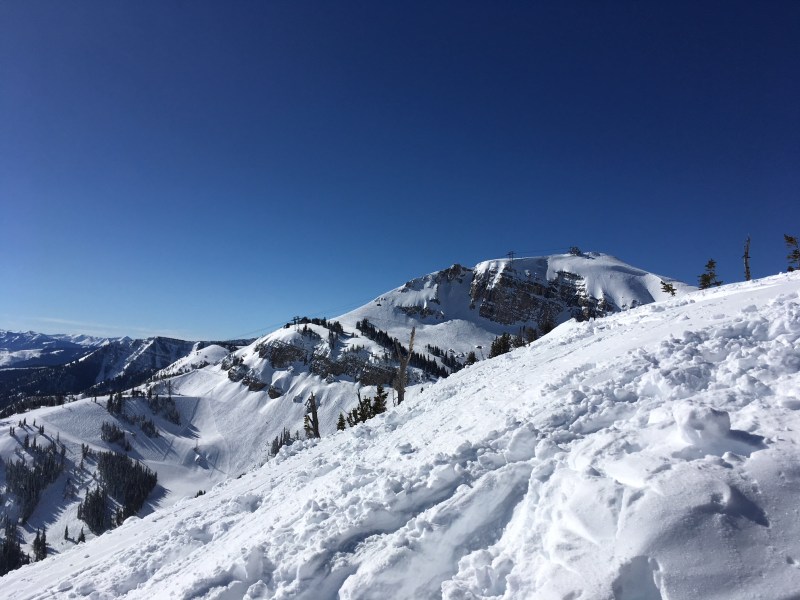
Looking across from the edge of Casper Bowl to the entrance of Corbet’s Couloir at Jackson Hole
“The videos make it look so easy though.”
When you watch a video clip, you’re seeing just that: a clip. You’re not seeing the times the athlete did a park-lap run-through to check out features and jumps. You’re not seeing the planning and research the person did before selecting their route down the mountainside. You’re not seeing the speed-checks and the times they decided not to hit it. You’re not seeing the times they failed and times it didn’t work out. Watch some b-roll footage, some wipe outs, and some full-length ski and snowboarding movies and you’ll see what I mean. This leads me into my final tip for you.
If You Don’t Know, Don’t Go
Made famous on Big Red at Jackson Hole, this phrase says it all. Particularly in the backcountry it’s important to know what you’re doing, where you’re doing it, how your equipment works should you need to use it, and who you’re doing it with.
If you don’t know your gear, don’t go.
If you don’t know the avy conditions, don’t go.
If you don’t know your partner’s riding ability, don’t go.
If you don’t know where you’re going to end up, don’t go.
It’s really simple, and both Jackson Hole Mountain Resort and Teton County Search and Rescue are huge advocates of this easy-to-remember preventative strategy. “If you don’t know, don’t go” applies to many aspects of skiing and riding in-bounds too, so don’t just save your wise decisions for beyond the boundary tape. You can read more about this philosophy here.
Big Red — Jackson Hole
There are some other great tools out there to help you stay safe and be safety conscious. If you would like to learn more checkout:
I don’t mean that he has to be your hero. I don’t even mean that he actually is your hero. But if you were to pick someone to be your hero, there are few like Candide Thovex.
First, let’s establish one thing: Candide Thovex IS human. He’s made of the same material that each and every one of us is made of. He lives in a house (sometimes), speaks his native language of French, and puts food in his mouth just like you do.
But that’s where the similarities really start to taper off.
When you view one of his videos, whether it be one of the early Rastafaride episodes, the sensational Few Words documentary, or One of those days, you’re not just watching another film with a skier in it. You are watching a man who has dedicated his life to the mountains and his skis. A dedication comprised of moving dynamically with the slope, learning how to interact with fluids in their various forms, and understanding what the mountain will allow while pushing those limits as far as naturally possible.
If you’re still lost at this point, follow this link to One of those days 2.
Candide doesn’t just ski the mountain, he rides with it’s natural curvature and pulls energy through his frame in ways people can only attempt to emulate. None are as smooth, as forgiving, or as in-tune as this skier from the small town of La Clusaz.
A born innovator in his ability to link turns and airs in an effortless nature-driven ballroom display. He is as much a storyteller as he is a skier. His form of speech flows through his skis and if you pay close attention you may be able to hear his voice through the lines he paints in the snow. His subtlety with words allows his riding to speak for him, in large swathes as he transitions from powder to kicker, and ridgeline to bump-field. His story is our story. His story is the story of skiing as he continues to push the boundaries of the sport.
Candide is a wake-up call to the world.
His storytelling does not end with his skis. He’s a shaper of film, a creative mastermind in-front of and behind the lens. He routinely lets the world into his mind, releasing jaw-dropping clips to the millions of skiers and non-skiers who view his videos. He not only appears in these segments though—he is the idea-man, the surveyor, the landscaper, the builder, the planner, the director, the editor, and the producer.
He’s an undercover celebrity—an example of modern-day mystery. Humility and showmanship in an unsuspecting package. He’s an example of pushing the boundaries in ways that we don’t even dream of, from his earliest D-spin 720 over chad’s gap to the infamous Big Bertha that broke his back and sent him into the backcountry. He’s an example of triumph in the face of outstanding adversity as he conquered the world stage of freeriding only 3 years after an injury that not only almost killed him, but should have crippled him and his career. Watch his Freeride World Tour Chamonix run here.
Candide is a wake-up call to the world. This is what humans are capable of when we push ourselves and trust our inner-drive. This is how far we can advance our disciplines when we are determined to do more. This is what heroes are made of. This is the spirit that drives us.
Candide is certainly human in both mental characteristics and physical make-up, yet he takes the human experience to it’s full potential. He is an example of what IS possible. He embodies the spirit that Warren Miller left behind, and then some. He takes what we know and then pushes it in a direction we didn’t think to consider. “Yeah, okay, you take your skis and ride them on grass and rocks and see what happens“. He sees what is currently being done and says that there is another way that noone has thought of.
Tell me that’s not what you want in your heroes!
Warren Miller once said, among many things, “adventure is the invitation for common people to become uncommon”. If you are still unfamiliar or unconvinced and have some time, watch Few Words because it will truly give you a different perspective of what this man is about.
Anyone of us can be a hero, and some of us have everyday heroes walking in and out of our lives. I pray that every one of your heroes embody at least some of these qualities, skier or not. That they too strive to push the limits. That they too speak louder through their actions than their words and act with humility over bravado. That they follow the energy that moves in all of us.
Maybe we’re not all that different. Maybe the only difference is that most of us won’t follow our inner drive, our true spirit. That most of us will not follow our inner Candide.
It’s January 25th and many of us are opening up our social media feeds before getting on with the day. I often wait until noon to look at anything so that I get some time for myself in the morning.
One of my friends has proposed to his girlfriend of a few years. The next is “in a relationship” with someone new. Another is feeling depressed and I reach out to give a message of hope.
One more scroll down the page and I’ll get back to writing.
“If you don’t do it this year, you will be one year older when you do”
~Warren Miller (ski in peace.)
This last post was followed by a long list of quotes of similar sentiment. I push my finger up the screen to see another post from my ski co. CEO about the passing of Warren Miller, then another from SKI magazine, and another from TGR, all expressing condolences, gratefulness for the impact his dedication gave the community while wishing ski-turns on the other side.
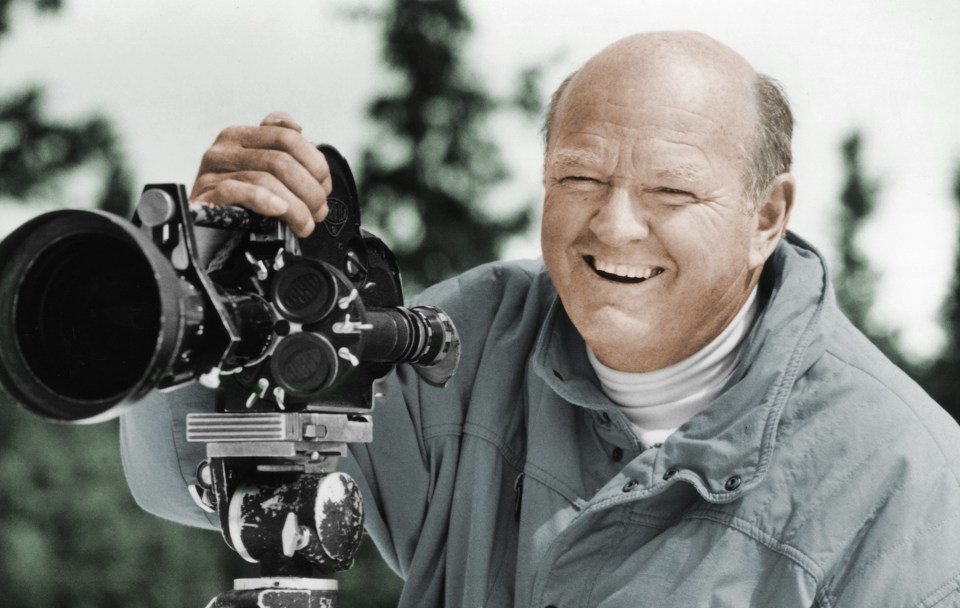
Photo courtesy of The Seattle Times.
I’m at a loss. I was half-way through writing a piece about Candide Thovex and his impact on both the ski and film industry, and I’m stopped in my tracks. How can I write about Candide in the shadow of this iconic figure passing?
Warren Miller started his company Warren Miller Entertainment in 1949 and began producing one ski movie every year. From Iconic films like Steep and Deep and Have Skis, Will Travel, to No Boundaries, Ski People, and Endless Winter (these being 3 of my personal favourites).
Every year from 1950 to 2004, a movie was produced that sold out local ski co. showings and theaters alike. Every year ski bums and cinematographers waited in anticipation for the next segment of Warren’s brain to unload on-screen. Each and every onlooker hoping to get the first glimpse of where the industry would turn next, what adventure we may be about to embark upon.
Warren was a storyteller, someone who in his own words, “enjoyed entertaining people…rather than just filming people turning right or left”. That’s one of those traits that separates the few pioneers from the pack. This view that everything is a story waiting to be told rather than merely a viewing of the object and the motion of subjects occupying the frame. A mindset that shaped the way these moments were captured and the way the story of skiing was told.
The Warren Miller attitude to filmmaking is something that has been carried into the 21st century largely by the sheer nature of how well his style of filming has been received. His adventurous spirit is abundant, always lively, and heartfelt. He carried this across more than 500 films involving the outdoors, his other passions including surfing and sailing. He pursued adventure throughout his life, from building his own surfboards in high school to ride the waves of Malibu, ski-bumming in Idaho, to his sailing expeditions from his residence at Orcas Island.
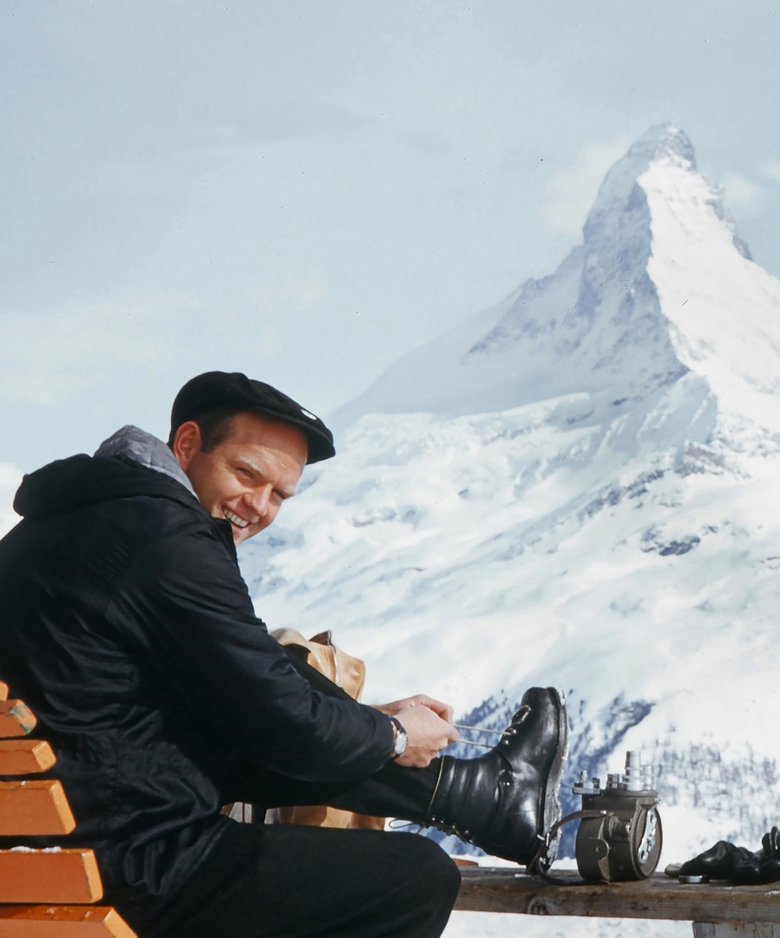
Photo courtesy of Chris Miller.
I was never fortunate enough to meet Warren. He would not have picked me out of a sea of faces, but I would certainly recognize him. He never knew my name nor my nature, but I could single out Warren’s voice from across the room, in the same way I recognize which one of my Patrol buddies is yelling down from the chair lift. It’s this feeling of intimacy littered throughout his films in great abundance that makes the loss of a man I never met feel like the loss of an old friend. He shared his stories with me. He shared those same stories with millions of people. It’s for these reasons that we feel so deeply the loss of our on-screen and in-ear companion. It’s for these reasons that multiple industries share their grief and overwhelming gratitude.
He leaves behind the Warren Miller Performing Arts Center in Big Sky MT, the Warren Miller Freedom Foundation for young entrepreneurs, a host of family, and a massive community of loyal followers.
As I take a moment to bow my head for our beloved friend, I can’t help but wonder about the future, and how his spirit will live on. Who will pioneer the next age of skiing as we wander into uncertainty?
Photo courtesy of Warren Miller Co.
There is no replicating the mind of Warren Miller, and for his bountiful life we are forever indebted, but we are thankful that there is a man who can keep that flame ignited. A man who is taking that spirit on its next adventure: Candide Thovex.
The writer of Warren Miller’s In Memoriam, suggests that “for those who are able to, ski a favorite run or enjoy another activity you love in Warren’s memory”.
For now, I think that’s just what I’ll do.
“The best place in the world to ski is where you’re skiing that day.”
Stay tuned for Part II: Candide Thovex. Everyone’s Hero.
There’s a lot of things that surfing isn’t and one main thing that it is.
See, it’s not necessarily about taking your chances or risking it all, though there are a handful of surfers that do, and they do it very well.
You don’t have to put everything on the line, every time you paddle out.
It’s not about the outdoor, care-free “look” AND it’s not about what it means to anyone else.
It’s not about a lot of things, and it’s a lot about one thing..
Sending it.
ALL. DAY. LONG.
Ha, kidding.
Maybe it’s not about being Laird Hamilton though his passion and dedication are inspiring. Or on the flipside, trying to get on kookslams for your daring stunts stupidity.
Maybe its not about snapping photos or emulating a style.
And maybe it’s not even the nature of what we do when we’re out in the wild, even though we know we’re counting on our raw awareness and inner-primal instinct to pick our way through the madness, the often crowded lineups of our favorite spots.
Maybe it is about something much simpler.
For me, it’s about the connection.
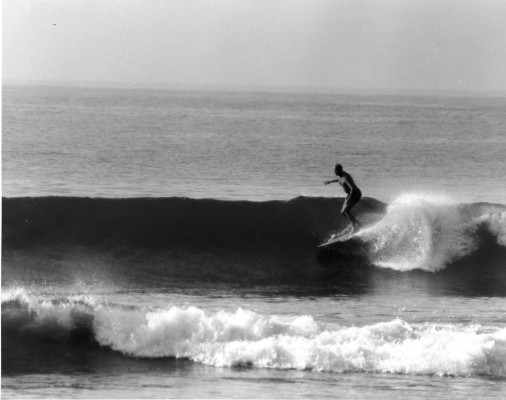
It’s the connection I feel riding a wave. 2-3ft of crumbling liquid as I glide my 8’ log is just as glorious a day in the summer as that crashing peeler I snag at the end of September on my 5’8” fish, laying into that first bottom turn and looking down the line. It’s not about the size of the waves, nor the looks from the beach. There’s something bigger that I feel when I’m out in the ocean that no one can take away from me.
The beautiful thing about surfing, is that it’s whatever you want it to be.
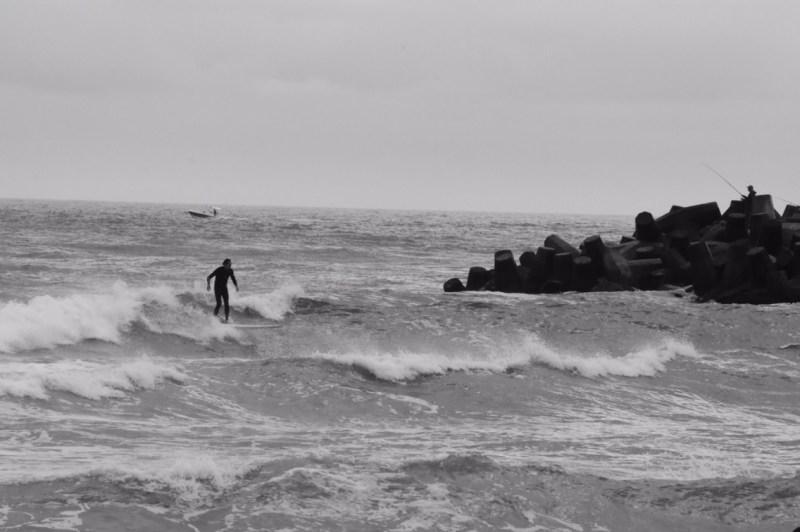
Everyone has a different story with surfing; some are of finding peace; some are stories of healing; others are of simply wanting to enjoy a sport, just beginning to take those first steps into something bigger. Whichever way you cut it, surfing is transformational in the way we experience and grow with the water. In the way we experience nature in the waves.
Whichever way you cut it, surfing is transformational
My story is one of living in nature and with nature, following it’s ebbs and flows as it provides. The story of surfing is what you make it, whether you’re taking a long ride or just catching that first crumbler into shore.
I don’t know why heavy impacts don’t make me stop doing what I do, but they don’t.
So why do I continue doing what I do? And, is it even about that?
Riding through powdery forests and down pillow lines of unknown rock and undergrowth is ideal. It’s not a thrill-seeking thing, nor is it a death wish. It’s about the substance I’m floating through and nothing else.
Whether I’m on skis or a board, not knowing what lies below is part of why we go out there. You know it’s mainly some sort of liquid, but the earth’s natural contours poke through with bumps and drops, and saplings and stumps.
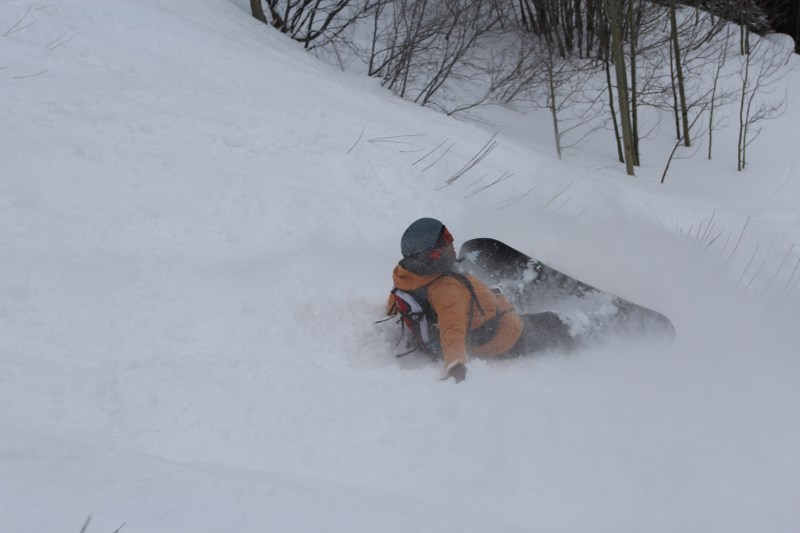
Sometimes an edge catches and we’re thrown. And sometimes you slam into a mound of snow that definitely wasn’t there when you saw it 2 seconds before airing out over that tree with the seemingly small yet generous cliff below.
Riding after a foot and a half of snowfall changes how much speed you carry to hit the downslope… Apparently I needed this lesson again.
Now in retrospect, I managed to yell “send it”, so that makes up for the lack of speed, right? Note: it did not. The trauma is always real.
“It’s not dumb. It’s just part of the challenge”
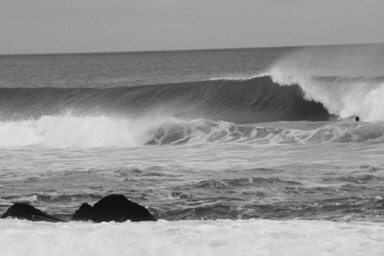
We have a similar feeling in surfing—not knowing what truly lurks beneath us—and I don’t mean your nightmares of Jaws, though fish are always a consideration.
Sometimes a rock pokes through the lineup where you hadn’t seen it before. Sometimes that rock is large driftwood that has up-ended in the sand permanently, always waiting for the day you forget to watch for it at low tide.
There are inherent risks involved with “extreme sports”, and while some think that participating may make them look “cooler” (yes, I’ve been asked if that’s why I surf), that’s not really where I’m going with this.
but… it definitely makes you cooler
There are many things that riding through the two forms of liquid is not to me, and one very real thing that it is. One very real reason that I get churned up by the ocean and spat back out, and why I narrowly (and sometimes unknowingly) avoid cliffs, dodge trees, and tread carefully in avalanche country: a connection.
It’s a connection to something far greater that we live amongst. And it’s not the only way of finding that feeling, but that’s what it is to me. It’s feeling aware, it’s feeling the rhythm of the earth, it’s taking into account the nature that we so obliviously ignore as we rush around the rest of our time trying to “get places”.
I get an innate, instinctual feeling from floating through this part-solid, part-liquid material that ebbs and flows with the contours of nature. It’s something only the wild could give me. And there’s always a reckoning, as the picture in front of me becomes something it could never have been without somehow being much more powerful than I. Without the reality of a force much more powerful than us…
That is why I do it. It’s not dumb. And it’s not about risking everything every time. It’s overwhelmingly not about that.
It’s just part of the challenge of finding yourself in this vast world. It’s part of the challenge of finding the connection to the soul.
The risk isn’t why. It’s just part of it.
However you choose to do it, ride the floaty substance—with what may be unknown beneath it—and find what makes you do it.
For every month, for every week, for every day, for every hour. It’s all I can think about until I’m finally there.
Aspen, CO.
It’s concrete. It’s tangible.
And if I wanted to, I could be there within 6 hours of any given moment.
I could give you a laundry list of reasons about why Aspen is one of the absolute best places to be. And I don’t mean just in winter. Anytime.
But that list of reasons is not what I dream about. It’s not what I find myself wondering about at 2pm on a Tuesday afternoon.
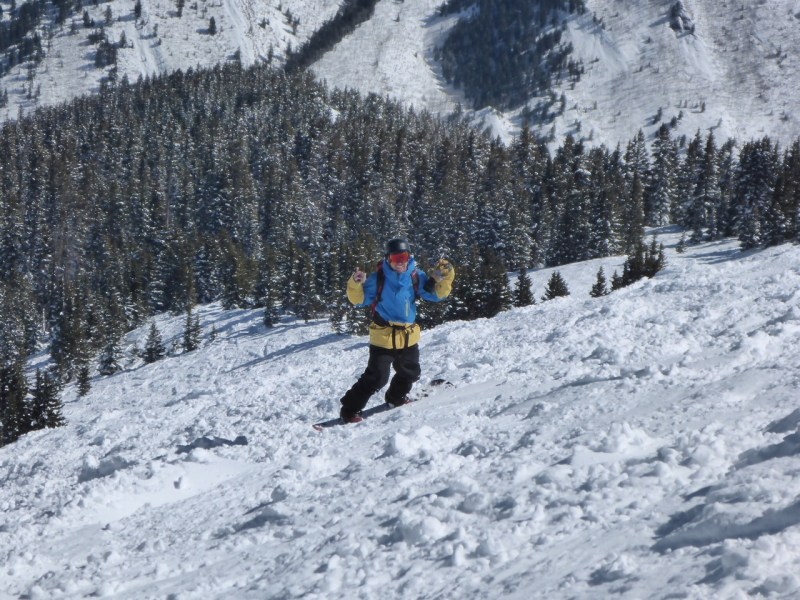
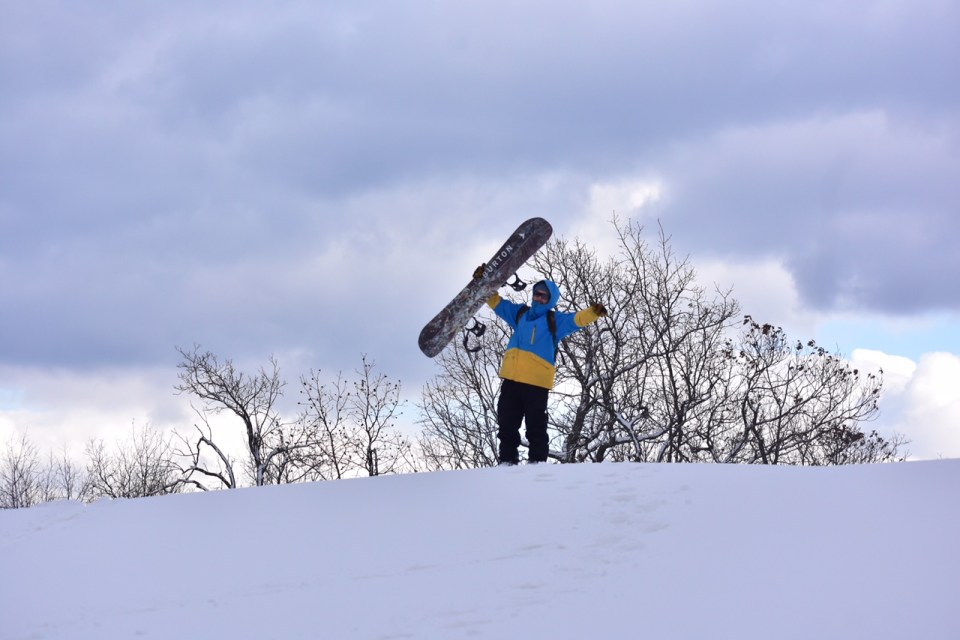
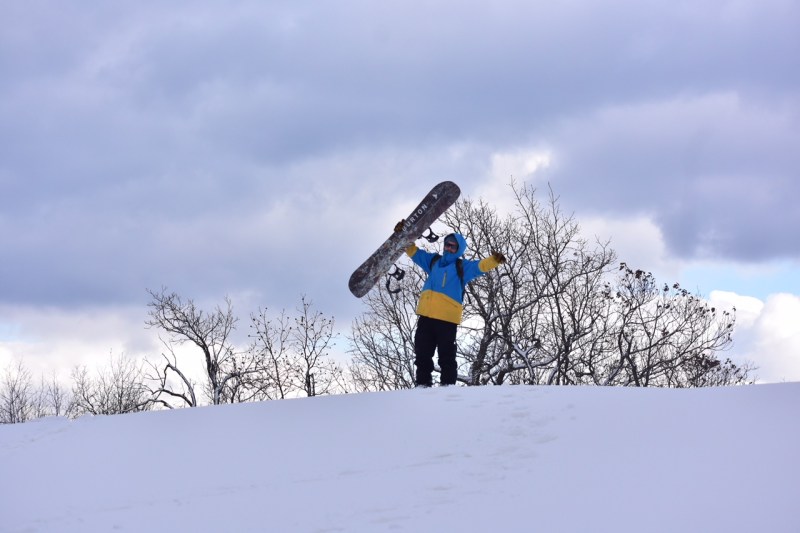
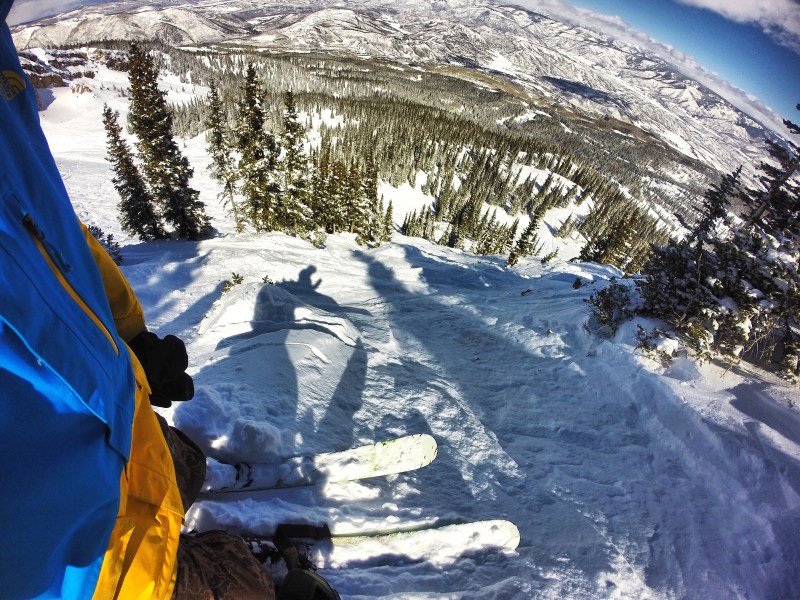
As I sit in a softly-lit meeting room, I look out of the window at the street below thinking about romping through 2 feet of snow. Bouncing softly as snow gradually builds into my beard, gently caressing my face and turning my blue and yellow jacket a softer hue.
I dream about the experiences I’ve had:
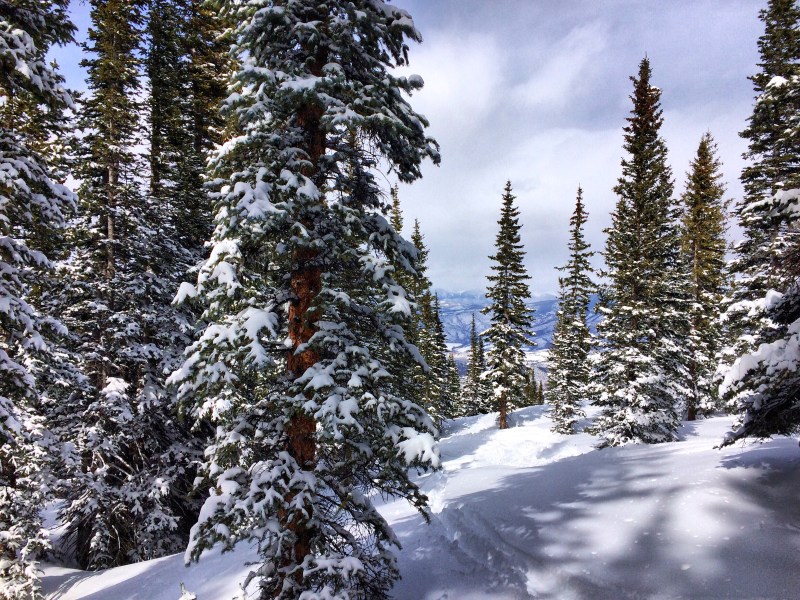
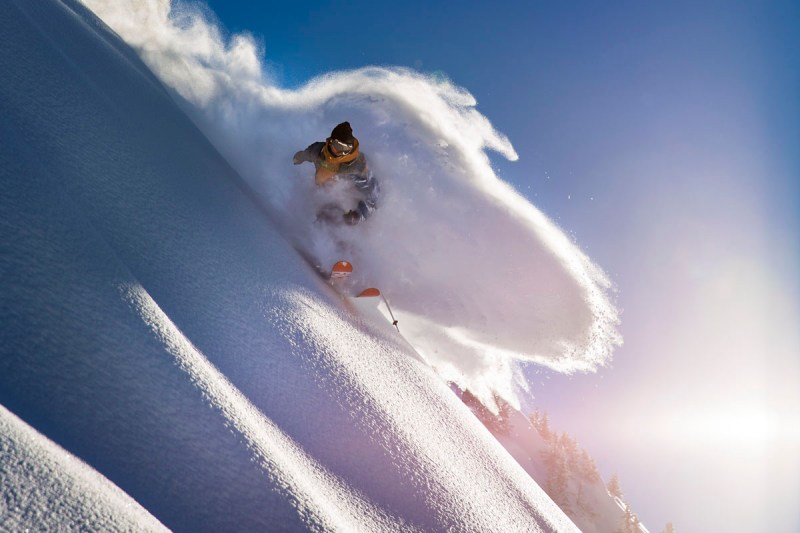
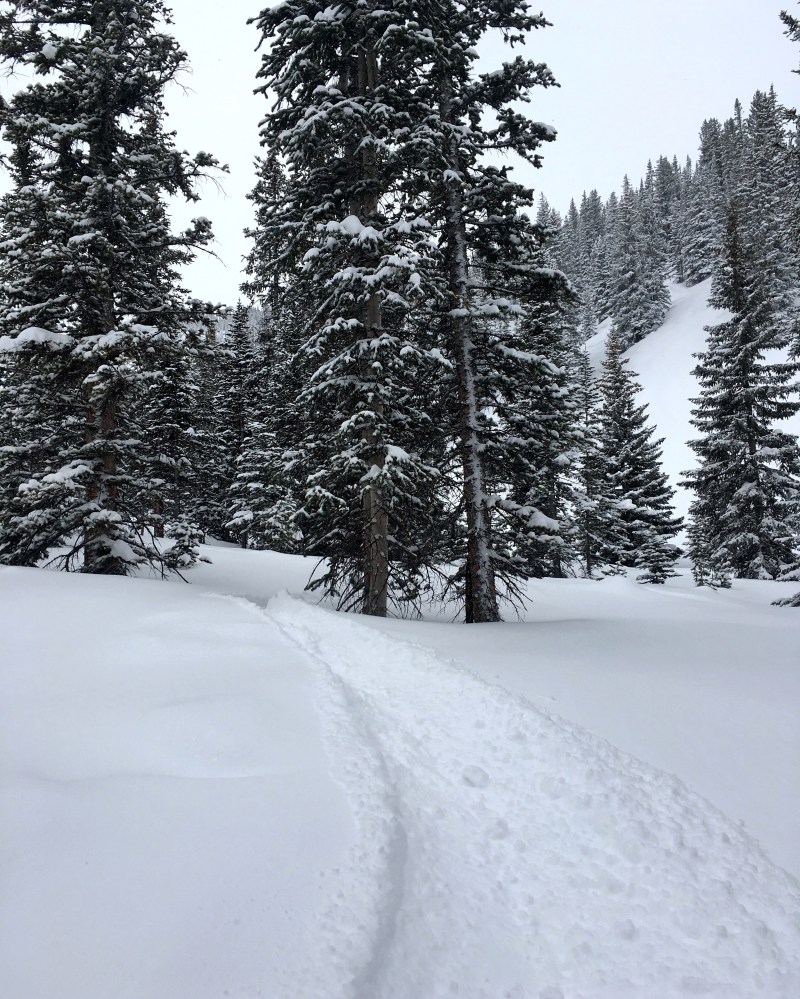
the feeling of cruising through a forest in a foot of freshly fallen powder with nothing but silence and the more-than-occasional release of that outrageous feeling that builds up waiting to billow out.
“Whooo” and “yeah buddy!” heard as we sail through the wilderness, effortlessly gliding, weaving, slashing our way through the sparsely spread conifers and spruce into wide open fields of fluff.
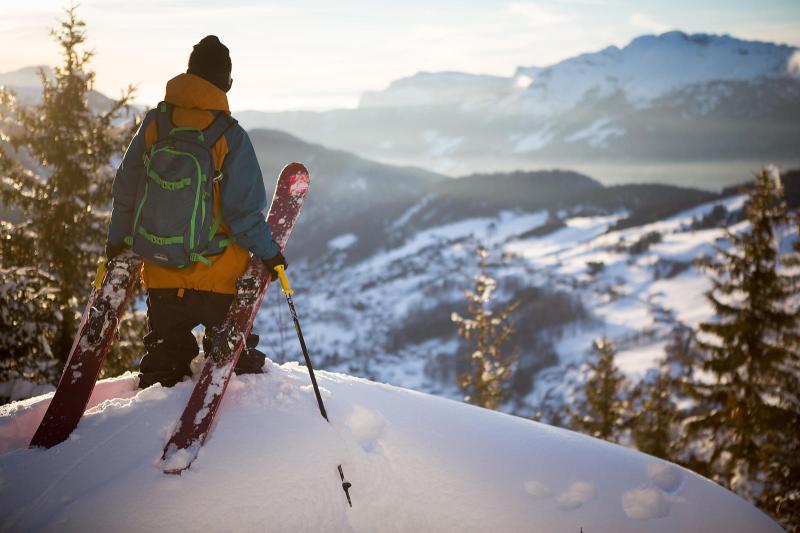
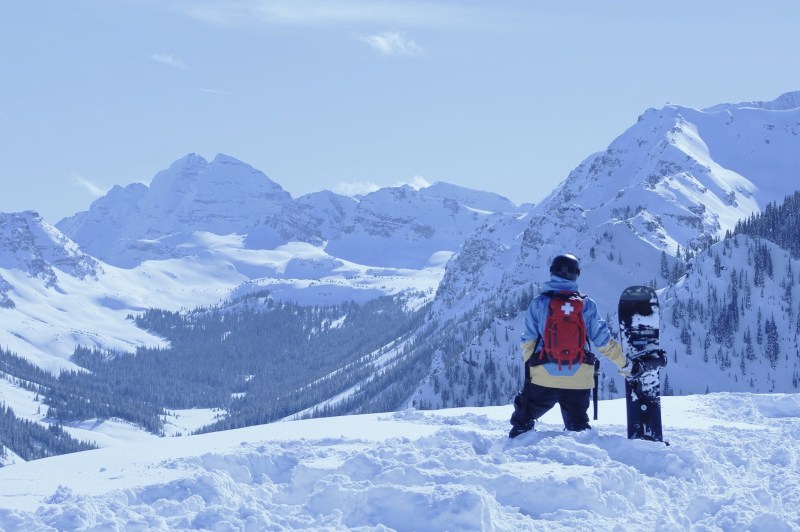
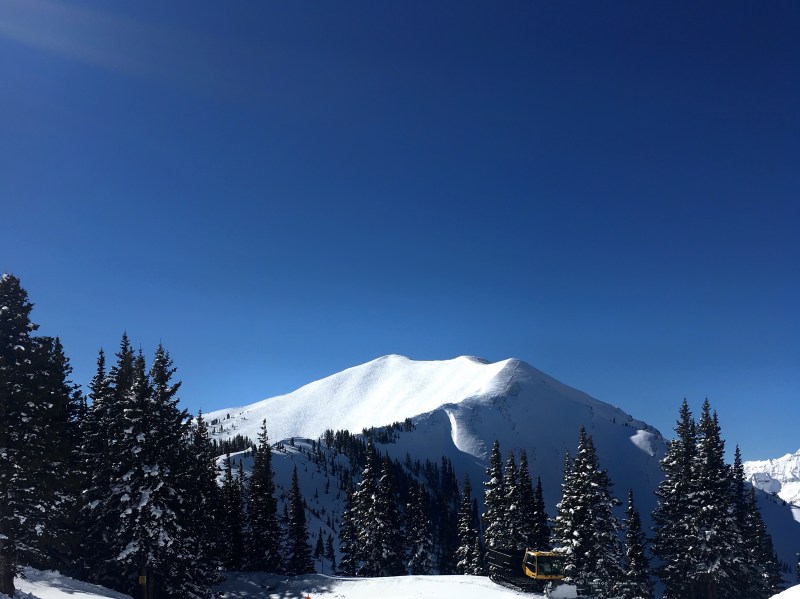
The feeling from an hour of hiking up Aspen Highlands bowl and across to our drop-in spot, looking out across the Rocky Mountains.
Or standing humbled in front of the Maroon Bells, looking across the valley floor as it expands and swallows entire forests in its vast embrace.
5 am and I can hear the faint sound of snow falling onto the ground through the window I left cracked.
8 am and I can feel the morning sunshine on my face and the beads of sweat dropping in slow motion from my forehead onto my pants as I press-on, planks on my back and goggles replaced with sunglasses for the remainder of the journey.
10 am and I’m standing on what appears to be the top of the world.
… After this there is no time. There is no job. There is no weight on my back. There is nothing else.
Nothing but the present. Only my spirit and Mother Nature, and this moment as I drop into the steeps. Here there is only the movement of energy across this expanse of mountains.
This is where I live.
40 mile-an-hour charging, somewhere between full throttle and occasionally tempered chaos, is the space I inhabit and the place I find myself again.
Join me across the powder, through the surf, and in some of the same places we call home.





 the current